Which version of ‘The Firebird’ did Dudamel play?

New Picture (1)

I’m a little perplexed by this. The Los Angeles Philharmonic program booklet implied strongly that Dudamel was conducting the complete 1910 version of the ballet. Stravinsky made three suites of “The Firebird,” though, and changed the orchestration for the suites of 1919 and 1945.

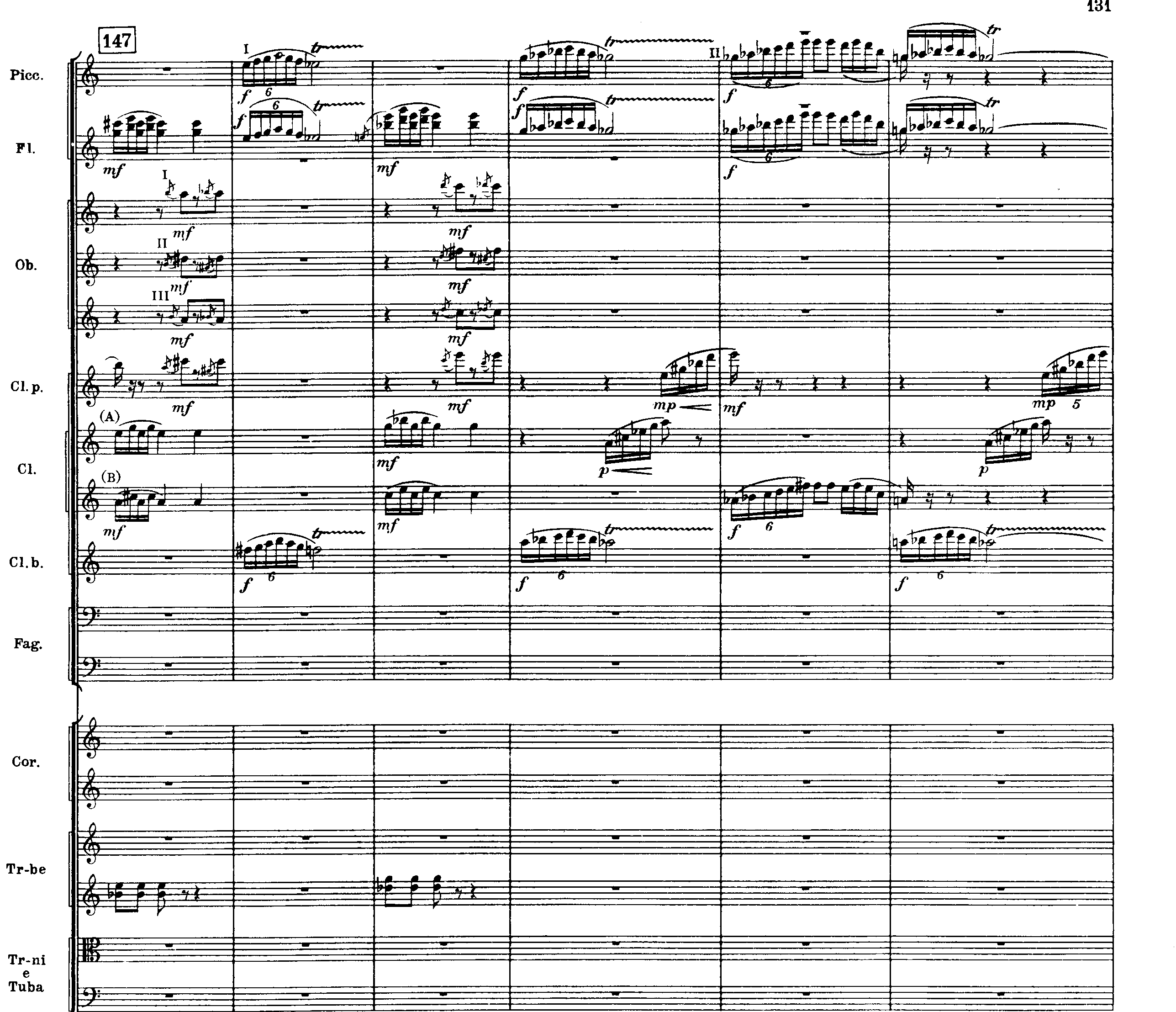
Here’s where it gets confusing. Dudamel and the Phil definitely played the complete ballet this weekend, not a suite, but there was one aspect of the scoring that I believe — but don’t know for sure — was taken from one of the suites. That is in the middle (not the end) of the “Infernal Dance,” where there were fortissimo solo trombone glissandi, which are NOT in the 1910 version (I just listened, with score), but are in at least one of the suites. Did Dudamel plug in an “Infernal Dance” from one of the suites? And if so, is that OK? I’m not so sure. Can someone at the L.A. Philharmonic enlighten us?

Man meets horn

mouthpiece

I got the old horn out today and gave it a bath. Took it apart, put it in the tub, ran some tepid water and added a dab of Palmolive dishwashing soap. Let it soak for about 20 minutes, and sluiced the inner part of the slide with a cotton cloth wrapped around a metal rod (designed just for cleaning trombones).

The trombone is a Bach “Stradivarius” Model 36, manufactured in Elkhart, Indiana and considered professional grade. I’ve had it since my college days, bought it used then, and it looks rather worn now. The mouthpiece is a custom job, made by Larry Minick, a famous brass instrument maker in Los Angeles.

model

After its bath, I greased up the slide and it works nice. I played a bit, and the horn sounds great, if you factor in the currently decrepit state of the player. I say “currently decrepit” because I aim to change that.

On April 8, I’ll be playing side-by-side with the Pacific Symphony, under the baton of Carl St.Clair, as part of an initiative the orchestra calls “OC Can You Play with Us?” and designed to allow amateurs the chance to perform with the group. I’ll be playing the second trombone part in the finale of Shostakovich’s Fifth Symphony, which has some great stuff for the brass, I’m sure you know … so, I started practicing today. Our first (and I think only) rehearsal is next week. The concert is free; I suppose it has to be. I’ll be writing about my experiences in the Orange County Register.

trombone

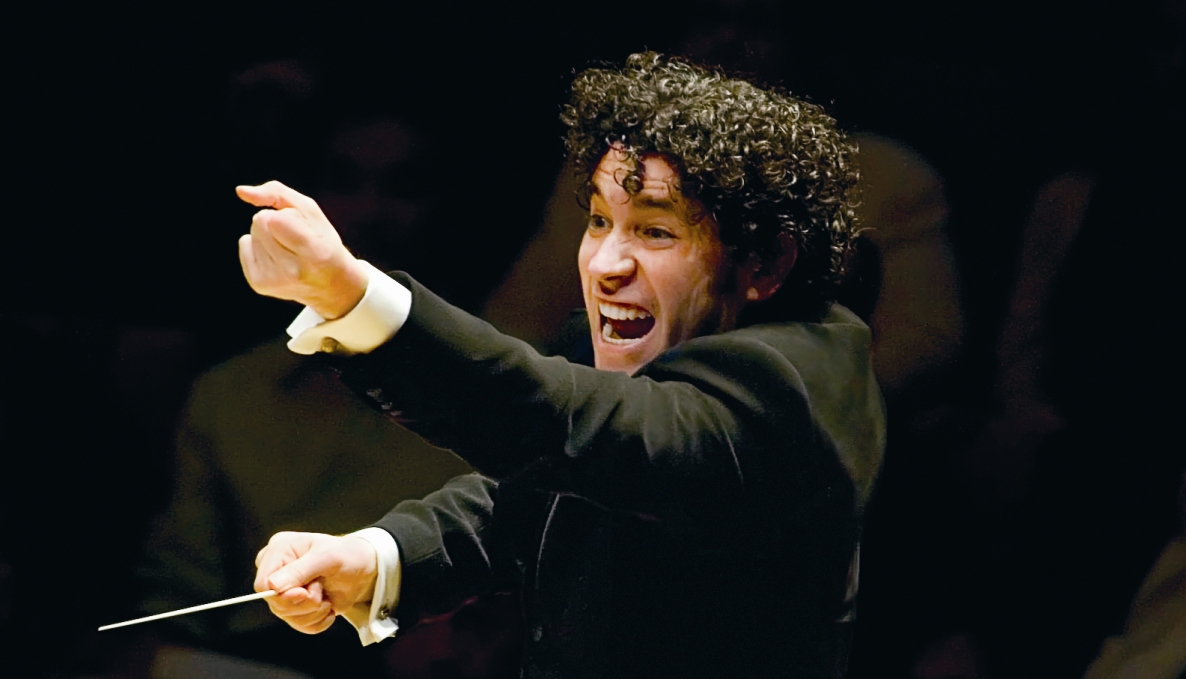
Dudamel tries out tough and dazzling tour program

thesea

In today’s Orange County Register online, I review last night’s concert performed by the Los Angeles Philharmonic and conducted by Gustavo Dudamel. The program, which included music by Claude Vivier, Debussy and Stravinsky, is headed to London, Lucerne, Paris and New York.

Click here to read my review, or pick up a copy of tomorrow’s newspaper.

Los Angeles Philharmonic announces 2013-2014 season

wdch-view-from-courthouse_hi

Wow, lots of goodies, and they gave us lunch, too.

Click here to read my precis, or pick up a copy of tomorrow’s Orange County Register.

photo: Music Center of Los Angeles County

Timings: ‘La Mer’

lamer

Just listened to both.

Pierre Monteux conducting the Boston Symphony (RCA Musique):

1. De l’aube a midi sur la mer: 8’35

2. Jeux de vagues: 5’55

3. Dialogue du vent et de la mer: 7’50

Carlo Maria Giulini conducting the Los Angeles Philharmonic (DG):

1. De l’aube a midi sur la mer: 9’22

2. Jeux de vagues: 7’13

3. Dialogue du vent et de la mer: 8’35

As fine as the Giulini is, I have to give the edge to Monteux, and I think at least part of the secret here is his exceedingly brisk tempi.

Review: Dudamel returns to L.A. Phil with Wagner, Brahms and Schumann

gustavo-dudamelb

In today’s Orange County Register online, I review last night’s Los Angeles Philharmonic concert, conducted by Gustavo Dudamel and featuring violinist Gil Shaham.

Click here to read my review, or pick up a copy of tomorrow’s newspaper.

photo: courtesy LA Phil

John Cleese on creativity

Well worth watching, no matter what your creative activity. I find his ideas ring true.

Related post: On writing

The Fanfare to ‘La Peri’

By Paul Dukas: The Fanfare to his ballet “La Peri.” I was lucky enough to play this piece in college. The harmonies don’t go where you expect them to. Wonder why we never hear it. Ernest Ansermet conducts the brass section of L’Orchestre de la Suisse Romande.

Pacific Symphony revives Puccini’s ‘shabby little shocker’

It was opera night at the symphony last evening. The program booklet warned me to “Prepare to be swept away.” I did what I could.

In today’s Orange County Register online, I review the Pacific Symphony’s semi-staged performance of “Tosca.”

Click here to read my review, or pick up a copy of tomorrow’s newspaper.

From last night’s program booklet

beethoven

I read the following in last night’s program booklet:

“Ludwig van Beethoven (1770-1827) was a German composer and pianist. A crucial figure in the transition between the Classical and the Romantic eras in Western art music, he remains one of the most famous and influential of all composers. His best known compositions include 9 symphonies, 5 concertos for piano, 32 piano sonatas, and 16 string quartets. He also composed other chamber music, choral works (including the celebrated Missa Solemnis), and songs.”

Oh yeah, that Beethoven.

Is it just me, or is this too basic? For those who already know Beethoven, it’s all but useless, maybe even a little insulting. For the uninitiated, it seems to me, it must be close to meaningless. If you don’t know who Beethoven is, then you don’t know what “Classical” and “Romantic” means, you don’t know what a concerto is, or why someone who composed 16 string quartets should be famous. Is it hard to write a string quartet or something? And is someone of that uninitiated ilk (not that there’s anything wrong with it) likely to be at the concert reading said program note?

Imagine a similar note at a Rolling Stones concert:

“Mick Jagger (1915-) is a famous British singer and frontman of the Rolling Stones. A crucial figure in the triumph of pop culture over everything, he remains one of the most famous and influential musicians of all the Rolling Stones. He is best known for singing “Satisfaction,” “Jumpin’ Jack Flash,” and other Stones hits, for wiggling his fanny during live performances and for his prodigious lips. He has also written 16 string quartets.”

My own opinion on writing program notes is that the writer should skip the biography of the composer (except when said composer is widely unknown) and concentrate on the biography (so to speak) of the piece that is about to be performed. And keep it brief, if possible.