Beethoven’s Second

Here’s the second of my series of nine essays on the Beethoven symphonies first published in 1999.

Beethoven’s Second: A master’s neglected gem.

I’ll dig up the others out of the archives and publish them in the weeks ahead.

My essay on Beethoven’s First is here.

Arturo Benedetti Michelangeli plays Scarlatti

Arturo Benedetti Michelangeli (1920-1995) plays Sonata in C by Domenico Scarlatti

Making sense of modern music

Making sense of modern (classical) music. The Orange County Register, July 23, 2010.

This is another list of 10 recordings. The challenge here was to pick 10 recordings of modern and contemporary music that would help guide the novice, but curious, listener. Some of the usual suspects are included, but I picked a few surprises too, I think.

I have found a lot of resistance to modern classical music in O.C. But I have also encountered many listeners who, while they don’t understand it, want to.

RTWTH

The Arts Blog named Best Blog in O.C.

Last night The Arts Blog, a popular haven for intelligent blather on the higher things in life, the home of The Most Interesting Man in the World and this blogger’s outlet for 4.5 years, was named Best Blog by the O.C. Press Club.

The Arts Blog was shut down on July 10, causing a national scandal.

An inside source tells me that there were boos at the ceremony when it was announced that the blog had been canceled.

Congratulations to my fellow Arts Bloggers Paul Hodgins and Richard Chang.

Quote of the day

“For a century and half the masses have claimed to be the whole of society. Stravinsky’s music or Pirandello’s drama have the sociological effect of compelling the people to recognize itself for what it is: a component among others of the sociological structure, inert matter of the historical process, a secondary factor in the cosmos of spiritual life. On the other hand, the new art also helps the elite to recognize themselves and one another in the drab mass of society and to learn their mission which consists in being few and holding their own against the many.” — Jose Ortega y Gasset, “The Dehumanization of Art,” 1925

Beethoven’s First: Genius makes an early appearance

Back in the late 20th century, when newspapers were still king, I wrote a series of nine essays on the Beethoven symphonies, one for each work. They appeared on successive Sundays in the Register, as lead up to a complete performance of The Nine in O.C., by John Eliot Gardiner and the Orchestre Revolutionaire et Romantique. My editor (Scott Duncan, a former music critic) and I cooked up the idea of the essays and the paper gave me lavish amounts of space in which to write them.

The essays never made it online (or if they did, they only lived there a short while) and have since languished deep within the Register‘s archives, from which I dug up the first one the other day and link to here: Naturally, it’s on Beethoven’s First Symphony.

Over the next couple of months, I intend to retrieve the other essays, post them on the newspaper’s website and link to them here. Once I have posted them all, I’ll make a page here and we’ll have an online guide to all nine symphonies.

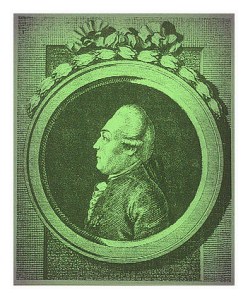
picture: baron van swieten, about whom you’ll learn a little more in my essay.

Alex Ross’s first record

I may have started something. Stranger things have happened.

At any rate, in his gracious post welcoming your favorite critic back to the blogosphere (or, as he spells it, błøǧösphère), Alex Ross (you know who he is) remembers his first record purchase, and, as it happens, it was a Bruckner symphony as well. Great minds, and all that.

He also still has the recording. See for yourself.

Related post: First record

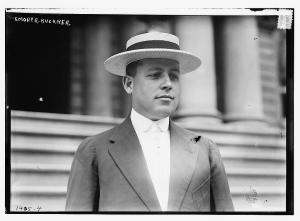
photo: emory bruckner, library of congress. I don’t know who he is but I liked the photo. His name might actually be emory buckner, not bruckner, since that’s what’s printed on the photo. (the catalog listing has him as “bruckner.”) click on for larger view.

Symphony of acrobats

My review: With the Pacific Symphony Saturday at Verizon, Cirque de la Symphonie demonstrated why it’s one of the most successful acts in the world of orchestral pops. The Orange County Register, July 18, 2010.

First record

originally written for kusc’s blog in 2009

My memory is a little foggy on some of the details. I was in high school, already a burgeoning trombonist, and already getting in amongst my mother’s collection of classical LPs. At some point, though, I decided to buy one of my own and that ended up being a recording of Bruckner’s Fourth Symphony, with Herbert von Karajan conducting the Berlin Philharmonic. To the best of my recollection, chairman, that was my first classical record. At any rate, that’s my story and I’m sticking to it.

Why Bruckner’s Fourth? I had never even heard of the composer, let alone his music, until about a week before. I was taking private lessons with a trombone teacher at Cal State Long Beach and he had gotten me started on what would come to be my daily bread for the next decade or so: orchestral excerpts. In those days they came in books (probably still do), just the trombone parts to famous and not so famous orchestral pieces that had significant contributions from the lower brass: the Overture to “William Tell,” “Ride of the Valkyries,” Schumann’s Symphony No. 3, “Bolero,” etc. Thumbing through one of the volumes during a lesson, we came across Bruckner’s Fourth and I remember my teacher playing the opening theme — two quarter notes, followed by quarter-note triplets, a characteristic Bruckner rhythm — and I thought it sounded pretty interesting and my teacher said it was a good piece, with good trombone parts. That was enough for me. I wanted to hear it.

Read more…
You know, for kids

Preview: Making a cirque out of a symphony. The Orange County Register, July 16, 2010.

Also:

Pacific Symphony to give free concerts in parks

Phil Society offering discounts on mini series

Top 5 classical concerts coming up