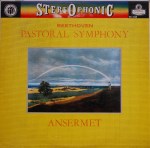
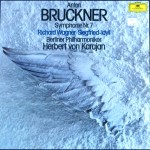
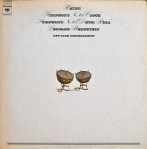
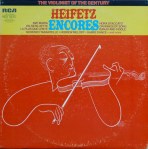
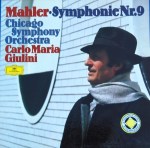
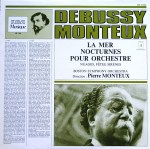
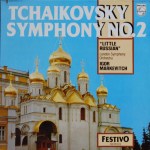
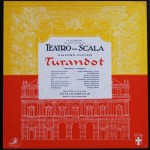
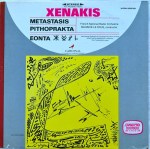
These record jackets are from my own collection. Like a true nerd, I even have some of them framed on my wall. At any rate, click on the thumbnails for larger views. For those of you who like these, there’s one more rather bizarre one below.
These record jackets are from my own collection. Like a true nerd, I even have some of them framed on my wall. At any rate, click on the thumbnails for larger views. For those of you who like these, there’s one more rather bizarre one below.

Story: Pacific Symphony to tweet during live concert. The Orange County Register, August 20, 2010. CLICK HERE TO READ ARTICLE

Here’s the third article in my series on Beethoven’s symphonies first published in The Orange County Register in 1999.
After ‘Eroica,’ music could never be the same.
By the time I wrote the essay linked above, in April of 1999, I was in the third week (naturally) of my nine-part series on the Beethoven symphonies, and beginning to feel it. Though I had done quite a bit of prior research, the actual writing of the essays was on a tight schedule requiring me to slam each one out in the period of a few days. Not easy for me at the time — and probably no breeze under any circumstances.
I remember being intimidated writing about the “Eroica,” and at least partly for that reason I chose a different tack than I had taken with the First and Second symphonies in doing so. I decided to compare an original instrument recording (led by John Eliot Gardiner) with a modern instrument recording (led by Carlo Maria Giulini) and discuss some of the interpretive issues involved. The result, while interesting in detail, is probably the weakest essay in the series. But who am I to say?
Gardiner, as you know, was coming to town shortly after my series reached its completion to conduct all nine symphonies. Naturally, an interview was set up. Unbeknownst to me, a flak from the Philharmonic Society, which was presenting Gardiner’s performances, sent him a copy of my “Eroica” essay before I interviewed him. Even worse, he read it.
I watched and listened to the video above this evening and enjoyed it. Everyone takes their gloves off and lays into Mozart, no namby pamby. I have to say I prefer my Mozart this way, generally. Friedrich Gulda is obviously a character (what’s with the hat?) but who cares? I like his style too, getting up off the bench and conducting the orchestra. What do you all think?

Music critic Donald Rosenberg, as you’ve probably already heard, has lost his lawsuit against his employer, the Cleveland Plain Dealer, and the Cleveland Orchestra. At least two conductors testified during the trial, which must be some kind of record. Martin Bernheimer (click on his name) provides wise commentary on the case.
I don’t have much to add. Though I was obviously rooting for Rosenberg, I can see why (or I think I can) he lost. From the outside, it looks like the Cleveland Orchestra had every right to complain about Rosenberg’s reviews (though it shouldn’t have) and his newspaper had every right to re-assign him (unfortunately).
What the whole situation points up is that a music critic, like every other reporter, serves at the pleasure of his newspaper. But it rubs both ways. If the newspaper doesn’t back up its music critic 100 percent, he ceases to be an effective music critic, because he can’t say what he has to say, or report what he has to report. His newspaper’s protection and support is the crucial ingredient in his independent voice and freedom of speech.

Apparently, it’s a glass of vodka, straight up and straight out of the freezer. How very Finnish. His sources of inspiration are “Books” and “The Work of Others.” And vodka, I presume. No word on his turn-offs.
You can see the advertisement for yourself here, though you may have to enter your birth date to do so.
I always enjoy seeing classical musicians in advertisements for some reason. I guess I feel represented. Leonard Bernstein pops up briefly in a new television ad for Mercedes Benz but I don’t see it on YouTube yet, so I can’t share it.
Previously, on drinking (click on headlines to read):
How to make a martini, Old School
St. Patrick’s Day Irish whiskey taste test
Concert review: Tchaikovsky Spectacular booms at Verizon. The Orange County Register, August 8, 2010. Click here to read my review.
I’d like to suggest an alternative program for some future Tchaikovsky Spectacular.
OK, just kidding about that last one. Any suggestions for something other than the “1812,” given that fireworks are an imperative?

I like to thumb through my old copies of the collected reviews of Virgil Thomson, reading here and there (or, re-reading) and, especially, checking out his lead paragraphs. He wrote great leads. I’m not sure I can explain exactly why they’re great leads — something about their casual, conversational tone mixed with a certain elegance. They are never tortured either; Thomson never sounded like he was trying hard.
Anyway, I came upon the following lead paragraph the other day. It seems a little atypical of Thomson (especially with its use of exclamation points), but it made me smile. The review, from Nov. 22, 1942, is headlined “Smetana’s Heir”:
“What a pleasure! What a pleasure to hear the Boston Symphony again! Yesterday afternoon’s concert in Carnegie Hall was substantial and delicious, with two symphonies for fare, an old and a new — the Beethoven ‘Eroica’ and a First by the brilliant Czechish composer Bohuslav Martinu. The music was interesting, and the renditions couldn’t have been more elegant. Just think of it! An ensemble that sounds like an ensemble playing music that sounds like music! It restores one’s faith; it really does.”
I would be delighted to pick up my morning newspaper and read something like that.

Concert review: Gustavo Dudamel and the Los Angeles Philharmonic perform a memorable night of light classics at the Hollywood Bowl. The Orange County Register, August 6, 2010.
photo: mathew imaging


 Classical Life