
I chat with tenor Charles Castronovo, a Cal State Fullerton alum, and composer Daniel Catán about the new opera “Il Postino,” premiering at Los Angeles Opera this week. Click here to read interview. The Orange County Register, September 21, 2010.
I chat with tenor Charles Castronovo, a Cal State Fullerton alum, and composer Daniel Catán about the new opera “Il Postino,” premiering at Los Angeles Opera this week. Click here to read interview. The Orange County Register, September 21, 2010.
Here’s what you’ve all been waiting for: my fall arts preview, classical music division. The link will send you to a short article (a “topper” in journalese) with a slide show. Click through the slide show, and read the captions for information on my picks. Every slide you view and read is a “hit” for Tim Mangan and the cause of classical music. Go ahead, watch the slide show twice, and send the link to your friends, neighbors, enemies and congressmen. Click here, or above.
Here’s a list of ten recommended Giulini recordings that some of you asked for. In no particular order. All are available on Amazon.com. Click on the thumbnails for larger views of the covers. Giulini lovers: Please weigh in with some of your own suggestions in the comments section.
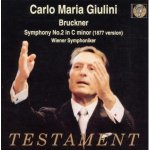
1. Bruckner: Symphony No. 2. Makes a (deservedly?) neglected work sound like a masterpiece. Vienna Symphony. Testament.
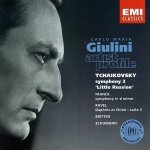
2. Carlo Maria Giulini: Artist Profile. Includes sizzling accounts of Tchaikovsky’s Symphony No. 2 and Britten’s “Young Person’s Guide to the Orchestra” with the Philharmonia Orchestra. EMI Classics.
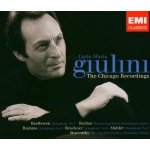
3. Carlo Maria Giulini: The Chicago Recordings. Includes roof-raising accounts of Bruckner’s Symphony No. 9 and the orchestral music to Berlioz’s “Romeo and Juliet” with the Chicago Symphony. EMI Classics.
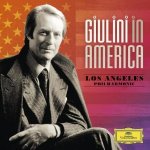
4. Giulini in America. All of his purely symphonic recordings with the Los Angeles Philharmonic, including Beethoven’s Symphonies 3, 5 and 6 (the “Eroica” is among the best ever recorded), a stellar Schumann Third and Ravel’s “Mother Goose,” a specialty. Deutsche Grammophon.
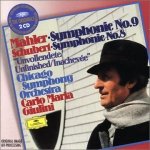
5. Mahler: Symphony No. 9. Intense. Chicago Symphony. Deutsche Grammophon.
I picked up my morning newspaper today, the print edition, natch, and just below my People column, on A2, not in the arts and entertainment section, is a rather large advertisement for the symphony orchestra that I cover regularly in my other life, as a music critic.
Does the orchestra figure that Mangan’s readers are going to follow him to A2 and the new celebrity beat? And are those readers so numerous that it would be worth the orchestra’s while? Or would the orchestra have purchased that space anyway, People column or not, Mangan or not?
These are questions I can’t answer. But maybe, just maybe, I should ask for a raise.
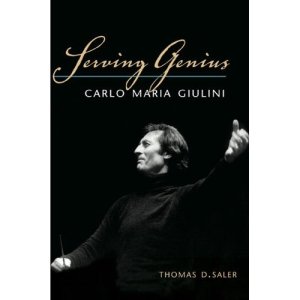 Thomas D. Saler’s “Serving Genius: Carlo Maria Giulini” (University of Illinois Press) is a hagiography (i.e., the biography of a saint), if not by design, then by necessity. In writing this first biography in English of the great Italian conductor, Saler interviewed dozens of Giulini’s former colleagues, critics, and the musicians who played under him. No one has a bad thing to say (quite the converse). Actually, the author did manage to find one or two Giulini naysayers, probably under a rock somewhere. They certainly do not come off well.
I read this book eagerly in a couple of days when it came out earlier this year, and have been meaning to write something about it ever since. I have found it difficult to do so because Giulini is something of an idol of mine and I find it embarrassing to gush in public. What’s more, I am a source in the book. It seems that my claim on being the last American journalist to interview Giulini (a few days before his 90th birthday) is true, and the interview, quoted by Saler, turns out to be, at least as far as I’m concerned, a rather dramatic moment near the end of the book.
Also among those interviewed or quoted are my critical colleagues Mark Swed, Alan Rich and Martin Bernheimer, the latter of whom provides a plethora of interesting details and insights. The late Ernest Fleischmann, who brought Giulini to the Los Angeles Philharmonic and who lived across the street from him here, is quoted extensively, as is friend of Classical Life, Mark Kashper, a violinist in the L.A. Phil.
A scene from “A Song to Remember” (1944), with Cornel Wilde as Chopin, Stephen Bekassy as Liszt, and Paul Muni as Chopin’s teacher, Prof. Joseph Elsner. I laughed out loud the first time I saw this, many years ago.
Halliwell’s capsule review of the film:
“Hilarious classical music biopic which was unexpectedly popular and provoked a flood of similar pieces. As a production, not at all bad, but the script …”
Jose Iturbi dubbed the piano playing.

It’s that time of the year again, a time of the year I hate, that being time to write the Fall Arts Preview for the newspaper. I even hate the name of it, because it isn’t a preview of the arts in the fall, but a preview of the whole season — you know, through June of next year — that is published in the fall, or, as in most cases including this upcoming one, late summer.
Anyway, what I hate is predicting the future. I have to pick out the top ten classical events (emphasis on Orange County, but including L.A.) from a variety of classical music organizations’ season schedules. How should I know? Maybe they’ll be interesting, maybe they’ll be good, but maybe not. That’s what I’m a music critic for — to go to the concerts and find out.
OK, I get it. I’m the critic, and people feel I’ll have some sort of insight into what might be great in the coming season. I get it. But looking at my top ten picks from last season, I didn’t do that well. Of my ten picks last fall, one turned out in the event to be great, six turned out OK to halfway decent, two sucked fairly big time, and one was canceled. (See my picks from last year here.)
What’s more, in those top ten picks, I missed a number of concerts that turned out to be among the most memorable of the season. (Such as Lionel Bringuier conducting Shostakovich’s Sixth; Louis Lortie performing Chopin’s Etudes; and Long Beach Opera’s one-woman “Diary of Anne Frank”) They were surprises, sure, but isn’t that why we go to concerts? A top ten list gives the impression that what will be best is predictable. It ain’t.
This season, should I pick the Vienna Philharmonic as one of my top ten? (They weren’t so good the last time I heard them.) Should I choose the Kronos Quartet performing a new work by Steve Reich? (Might be wonderful, but we’ll have to see, won’t we? That’s the point.) Similarly, should I recommend Daniel Catan’s “Il Postino” or Magnus Lindberg’s “Graffiti”? A new production of “Lohengrin” with Ben Heppner? The Pacific Symphony performing Philip Glass or Bruckner?
I might add (I think I will) that the ten concerts in the upcoming season that look most promising or interesting (or whatever) to me, probably aren’t going to be the ten concerts that you’d most enjoy, whoever you are. I’d like to see the Xenakis opera at Cal Arts. You probably want to hear Andrea Bocelli in a sports arena somewhere, if statistics are any indication.
Pick your own damn ten concerts is what I say. Criticism — it’s not a shopping service.
OK, as you were.

CalArts will present a city-wide celebration of composer Iannis Xenakis beginning in November and lasting through February. A highlight of the proceedings will be an open-air performance of his opera “Oresteia,” and it’s free. … Pianist and blogger Jeremy Denk writes a thoroughly crabby and erudite manifesto on program notes. … Dean Corey, president of the Philharmonic Society of Orange County, has started a blog and he seems to have hit the ground running. … The New York Times announces that Orange County, due to changes in demographics that are transforming the area, is no longer Nixon Country. “You have areas of poverty and areas of great affluence and less of a middle,” says one source. Arts organizations and newspapers take note. … The LA Phil has unveiled plans for Gustavo Dudamel’s second season-opening gala. Juan Diego Florez will sings arias by Rossini, but the fun may be in the instrumentals, which will include the Overtures to “La gazza ladra” and “William Tell” and Arturo Marquez’s Danzon No. 2. … Carl St.Clair will conduct the Pacific Symphony’s opening night concert after all.
I saw this on Iron Tongue of Midnight and it’s just too funny not to share.
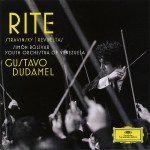
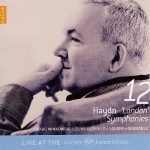
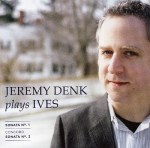
REVIEW: New recordings from Gustavo Dudamel, Marc Minkowski and Jeremy Denk. The Orange County Register, August 31, 2010. CLICK HERE TO READ REVIEW



