 (Part 2 of a talk delivered at the Paul Bowles Centennial Festival at University of California, Santa Cruz, February 2011.)
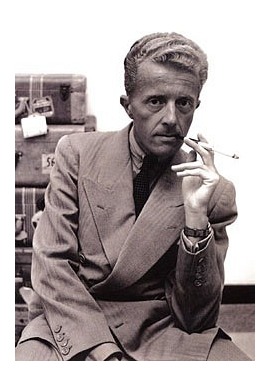
But Bowles also belonged to the distinguished line of composer/critics which included, among many others, Berlioz, Schumann, Debussy, Copland and Thomson himself. The composer/critic is a special kind of critic, one who looks at and assesses his art form from the inside, as a practitioner and a mechanic. As such, he is often interested in the music itself more than the performance or performer; and he probably has some strong personal feelings, as Bowles did, about what a proper piece of music should sound like.
Bowles’s criticism covers a wide range of musical subjects, from jazz and pop to film and folk music, from traditional classical music to avant-garde. At the Herald Tribune — where Thomson attempted to broaden the range of music criticism and critics often took an anthropological interest in nonclassical music — Bowles fit right in, reviewing Frank Sinatra, the Trapp Family Singers, a child accordionist, a thereminist. He heard Stravinsky conduct his own works, Villa-Lobos, too, and first performances of Shostakovich, Prokofiev, Vaughan Williams, Thomson, Bernstein, Cage, Milhaud, and many others.
He approached his assignments donning different hats — as ethnomusicologist, as anthropologist, as objective reporter and as transparently biased composer.




 Classical Life