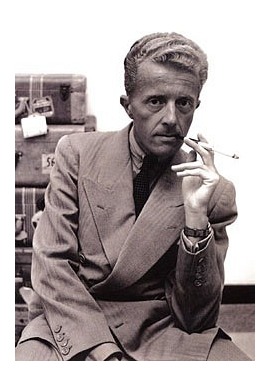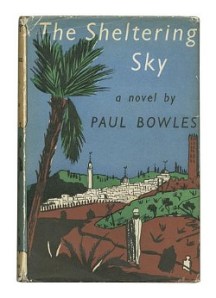
The music criticism of Paul Bowles (part 1)

(A talk delivered at the Paul Bowles Centennial Festival at University of California, Santa Cruz, February 2011.)

When the French composer Hector Berlioz became a music critic, in the 1830s, he called it a “calamity.”

“I must now describe the circumstances by which I came to be caught in the toils of criticism,” he wrote in his Memoirs.

Berlioz thought of criticism as a form of warfare, as a way of fighting his musical enemies and of elevating his music heroes — of literally settling scores. That warfare wore on him throughout his long career as a music critic. What’s more, despite his sparkling literary style, Berlioz confessed that he hated prose composition, often agonizing over or putting off the writing of an article for days.

A century later, another composer, Paul Bowles, took up music criticism as well. He initially had reservations about it — especially about the tight deadlines required by the newspaper journalism of the day. But he grew to enjoy writing music criticism and, in the process, writing prose. His decade of writing music criticism paved the way for his fiction.

From 1339 through the first part of 1945, in fact, he published nothing in prose but music criticism, and quite a substantial amount of it. From 1931, he had contributed translations of articles on music, then his own music criticism, the journal Modern Music, a publication of the League of American Composers. Aaron Copland, Bowles’s teacher, friend and, probably, one-time lover, was the guiding light of both the League and the journal. Then, from 1942 through early 1946, Bowles served on the music reviewing staff of the New York Herald Tribune, where another friend and teacher, Virgil Thomson, reigned as chief critic. In his three and a half years there, he wrote more than four hundred music reviews and columns.

Read more…

Interview with The Most Interesting Man in the World

Beating me to the punch, the NewYorker recently caught up with the actor who plays The Most Interesting Man in the World. It turns out, he’s rather interesting himself.

“His mother has a tattoo that reads Son.”

Renee Fleming recital added

The acclaimed soprano will make a special appearance in Orange County in April. Click here to read my story

Opera returns to Orange County courtesy of the Pacific Symphony

Story: The Pacific Symphony unveils its 2011-2012 concert season. The Orange County Register, February 7, 2011. Click here to read my article

Long Beach Opera performs Cherubini’s ‘Medea’

Review: The company presents the composer’s 1797 tragedy in a typically provocative production. Opera News, January 29, 2011. Click here to read my review

Paul Bowles at 100

I’ll be making a rare public appearance before the legions of my adoring fans this weekend as part of the Bowles at 100 festival at the University of California, Santa Cruz. (Schedule here.) I’ll take part in a panel Saturday morning with the Guatemalan writer Rodrigo Rey Rosa and the ethnomusicologist Philip Schuyler. My lecture, naturally, is titled “Paul Bowles as Music Critic,” and it’s largely based, also naturally, on my book.

In addition to the conference talks and lectures, there will be concerts featuring Bowles’ own distinguished music and an exhibition of images and artifacts from his career.

If you happen to be in Santa Cruz over the weekend, stop on by. Mention this blog and you’ll receive a completely dumbfounded look and a free handshake.

“The piece itself is couched in an unamusing, degenerate style whose sole point seems to be that of keeping the textures every moment at the highest possible degree of richness. Unfortunately that richness palls almost immediately, as greasiness does in cooking.” — Paul Bowles on Rachmaninoff’s Piano Concerto No. 2.

Marcelle Meyer plays Rameau

I don’t know much about the French pianist Marcelle Meyer, but have recently been investigating her playing on YouTube and very much like what I hear. There’s a fabulous looking box set of her recordings that I have my eye on — I especially like the repertoire she played.

Anyway, I thought I’d share the above because I enjoyed it and I thought you might too.

McFerrin on Kleiber

An interesting post by Alex Ross, regarding conductor Carlos Kleiber’s voracious reading habits, reminded me of an interview I had a few years ago with the singer Bobby McFerrin, who, of course, is also a gifted conductor.

Kleiber, apparently, was also a mensch. Here’s a transcript of that part of my conversation with McFerrin that applies:

McFerrin: “Kleiber’s just my favorite conductor period.  Yeah, he was just brilliant in just about every way. I haven’t heard it on recording but I have a DVD of him conducting Beethoven’s 7th symphony. … It’s unbelievable. He’s like sublime, he was like on a planet all by himself.

“And I’ve got to tell you this story. When I first started conducting I was greeted with a lot of sort of, you know, ambivalence, because I just had this hit, right, ‘Don’t Worry, Be Happy.’ And so what do I have to say about Beethoven? A lot of people weren’t aware that I loved classical music and I grew up that way. So I was working with an orchestra in Germany. I’d only been conducting at this point maybe maybe 4 years. I think 3. I had no idea of what I was doing. None. …”

Read more…

Philharmonic Society of O.C. announces 2011-2012 season

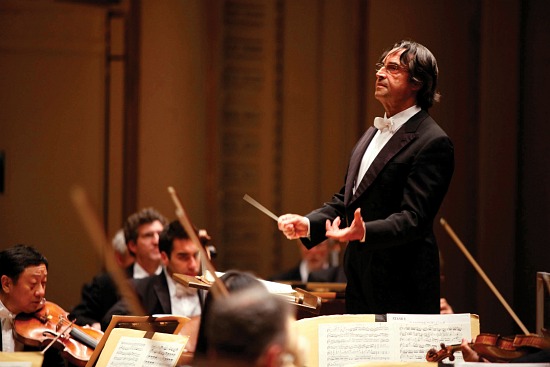
Story: The Society will present the Chicago Symphony conducted by Riccardo Muti and the New York Philharmonic conducted by Alan Gilbert, among others. The Orange County Register, Jan. 27, 2011. Click here to read my article

photo: todd rosenberg, courtesy of the chicago symphony

Lang Lang performs Prokofiev with the Pacific Symphony

Review: The second pianist in two days with the initials L.L. performs in O.C. The Orange County Register, January 26, 2011. Click here to read my review