The great Rafael Mendez plays “Flight of the Bumblebee” and, in a single breath, the “Mexican Hat Dance.”
The great Rafael Mendez plays “Flight of the Bumblebee” and, in a single breath, the “Mexican Hat Dance.”
Review: With remarkable concert at Soka, the young Calidore String Quartet declares: Take note. The Los Angeles Times, Nov. 7, 2016.
Ensemble Diabolicus.
Paul Paray conducts the Detroit Symphony Orchestra.
Christopher Hogwood conducts the Danish National Radio Symphony Orchestra.
0:00 – I. Allegro molto e con fuoco
8:32 – II. Allegro moderato
13:34 – III. Andantino
20:50 – IV. Finale. Allegro non troppo e marcato
To hear other works in my Neglected Symphonies series, click here.
Someone had the good sense to post this whole thing online.
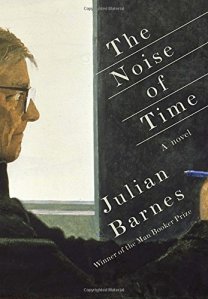 Perhaps the biggest news is that here’s a new novel by a celebrated author that takes classical music, or at least a major figure in classical music, as its subject.
Furthermore, that major author doesn’t embarrass himself once by misusing musical terms or by getting anything technically or atmospherically wrong, large or small, about the subject that so many in film and literature so regularly mess up.
Julian Barnes, the author of such remarkable books as “Flaubert’s Parrot,” “A History of the World in 10 1/2 Chapters” and “Arthur and George,” may not quite hit it out of the park with “The Noise of Time” as he did with those other books, but it is a solid outing, crisply told, memorable even.
“The Noise of Time” is about Shostakovich. The story is narrated by Shostakovich, sort of. The reader is put inside the composer’s head; we are aware of what he’s thinking. At the same time, those thoughts are relayed in the third person, so there’s also the feeling of the all-knowing author/narrator.
There is very little dialogue. Just the composer thinking about what is happening and what has happened to him in the course of his life. The thoughts are arranged more or less in chronological form, so that when you finish the book, you feel you’ve read a kind of biography.
Except, since this is fiction, we know quite a bit more about Shostakovich (this fictional one) than we could ever know about any real human being. Still, Barnes has based his tale on ostensibly non-fictional source material. In an author’s note at the end, Barnes names two main sources, Elizabeth Wilson’s “Shostakovich: A Life Remembered” and Solomon Volkov’s ever-controversial “Testimony: The Memoirs of Shostakovich,” the cause of the so-called “Shostakovich Wars,” which you can Google and read about for days.
Barnes says he treated the latter source as a biographer might treat a private diary, that is, as a source not entirely reliable and unbiased. Which I thought was a neat way of going about it, and which others, no doubt, will think is like having your cake and eating it too.
Shostakovich led a depressing life, as told here and elsewhere, a double life too. In “The Noise of Time” we are rather trapped inside that life, and at times I did find it wearing. Barnes tells much of the story in short bursts of one or two paragraphs (which are then separated from the next burst by an extra line space on the page). The composer’s thoughts jump around in this way, and circle around. And each of the bursts tends to resolve in some concrete, depressing conclusion. After a while, the reader gets it.
Richard Taruskin, in The New York Times, had deep objections to this book, and, as an academic, he has every right. (His objections are based mainly on the use of “Testimony” as a source.) But take “Testimony” as more or less true (and plenty of reliable witnesses do), and “The Noise of Time” seems to me an entirely plausible fiction, a possibly accurate portrayal of how the composer felt and thought. You can’t say it’s not.
BBC Symphony Orchestra conducted by Jirí Bělohlávek.
To hear other works in my Neglected Symphonies series, click here.
The great British conductor Sir Neville Marriner has died at the age of 92.
The founder of the Academy of St. Martin in the Fields, Marriner is one of the most prolific recording artists in the history of classical music.
Because of that ubiquity, he is perhaps a little underrated. Though few will ever say it, Marriner and the Academy made a huge contribution to the Baroque revival, probably as significant in the early years as that of the period practice pioneers.
He will of course be long remembered as one of the musicians responsible for the popularization of Mozart. He presided over the “Amadeus” soundtrack album, one of classical music’s all-time bestsellers.
A student of Pierre Monteux, he was a relatively understated presence on the podium. The results were never less than handsome and distinguished, but were also often inspired and even fiery.
I saw him in live performance several times, always with great satisfaction.
He continued to conduct until quite recently. I heard him conduct at Disney Concert Hall last year.
I met him, briefly, just once. I saw him sitting in the audience at another concert at Disney Hall and approached him to tell him I had enjoyed his concert at Segerstrom Concert Hall a night or two before. He was a most friendly fellow, without airs, who seemed to actually delight that someone had recognized him.
The Academy’s obituary says he died peacefully on the night of Oct. 2.


 Classical Life