The music criticism of Paul Bowles (part 3 of 3)

(Part 3 of a talk delivered at the Paul Bowles Centennial Festival at University of California, Santa Cruz, February 2011.)

Or this:

February 25, 1944, New York Herald Tribune

While Strauss’s glorification of the Uebermensch was in the act of being played last night, one found oneself wondering why, unless he wished to make as obvious a contrast between the sublime and the ridiculous in music, Dr. Rodzinski had chosen to expose the ugly form and character of Also Sprach Zarathustra to the Carnegie Hall public directly after the miraculous G Minor Symphony of Mozart. Throughout the course of its convulsions, one thinks of the behavior of some venomous insect or reptile which refuses to stop moving even after it has been hacked to pieces. When the last harmonica-like chord had been uttered and the piece had come to its end, one understood why the time necessary to a sonorously integrated performance such as last night’s had been spent on the work — the public likes this kind of music!

Thus there is no more to say on the subject, save to express one’s ingenuous wonder that this same public should not demand, in a work where the composer screams “wolf!” so very many times, that he should produce such an animal somewhere between the beginning and the end of the piece.

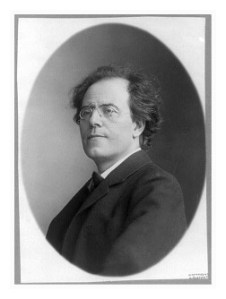
Bad music had social consequences for Bowles. His criticism traveled between two poles, from the reportorial on one end, to the adversarial on the other, as the case, in his mind, warranted. Sometimes he managed to mix the voices, as in his unusually astute reviews of new music to which he was sympathetic. On the other hand, the Mahler and the Strauss reviews quoted, whether one agrees with them or not, are worthy of inclusion in Slonimsky’s famous “Lexicon of Musical Invective.”

He seems to have loathed Rachmaninoff above all practitioners of his art, at least in print. (Out of a sense of self-preservation, perhaps, he never committed his distaste for Beethoven to writing.)

“The piece itself,” he wrote of Rachmaninoff’s Second Piano Concerto, “is couched in an unamusing, degenerate style whose sole point seems to be that of keeping the textures every moment at the highest possible degree of richness. Unfortunately that richness palls almost immediately, as greasiness does in cooking.”

Read more…

Carlos Kleiber documentary

Here’s the first of a five-part documentary on the conductor Carlos Kleiber. I haven’t yet watched the whole thing, but this first installment, about 15 minutes long, is fascinating. (I’ll post the other four parts here if interest warrants. Otherwise, you can catch the others on YouTube.)

Brooklyn Rider goes global in Laguna

Review: The members of the Brooklyn Rider quartet are joined by Kayhan Kalhor, master of the Persian kamancheh. The Orange County Register, February 14, 2011. Click here to read my review

photo: courtesy of laguna beach music festival

The music criticism of Paul Bowles (part 2)

(Part 2 of a talk delivered at the Paul Bowles Centennial Festival at University of California, Santa Cruz, February 2011.)

But Bowles also belonged to the distinguished line of composer/critics which included, among many others, Berlioz, Schumann, Debussy, Copland and Thomson himself. The composer/critic is a special kind of critic, one who looks at and assesses his art form from the inside, as a practitioner and a mechanic. As such, he is often interested in the music itself more than the performance or performer; and he probably has some strong personal feelings, as Bowles did, about what a proper piece of music should sound like.

Bowles’s criticism covers a wide range of musical subjects, from jazz and pop to film and folk music, from traditional classical music to avant-garde. At the Herald Tribune — where Thomson attempted to broaden the range of music criticism and critics often took an anthropological interest in nonclassical music — Bowles fit right in, reviewing Frank Sinatra, the Trapp Family Singers, a child accordionist, a thereminist. He heard Stravinsky conduct his own works, Villa-Lobos, too, and first performances of Shostakovich, Prokofiev, Vaughan Williams, Thomson, Bernstein, Cage, Milhaud, and many others.

He approached his assignments donning different hats — as ethnomusicologist, as anthropologist, as objective reporter and as transparently biased composer.

Read more…

The music criticism of Paul Bowles (part 1)

(A talk delivered at the Paul Bowles Centennial Festival at University of California, Santa Cruz, February 2011.)

When the French composer Hector Berlioz became a music critic, in the 1830s, he called it a “calamity.”

“I must now describe the circumstances by which I came to be caught in the toils of criticism,” he wrote in his Memoirs.

Berlioz thought of criticism as a form of warfare, as a way of fighting his musical enemies and of elevating his music heroes — of literally settling scores. That warfare wore on him throughout his long career as a music critic. What’s more, despite his sparkling literary style, Berlioz confessed that he hated prose composition, often agonizing over or putting off the writing of an article for days.

A century later, another composer, Paul Bowles, took up music criticism as well. He initially had reservations about it — especially about the tight deadlines required by the newspaper journalism of the day. But he grew to enjoy writing music criticism and, in the process, writing prose. His decade of writing music criticism paved the way for his fiction.

From 1339 through the first part of 1945, in fact, he published nothing in prose but music criticism, and quite a substantial amount of it. From 1931, he had contributed translations of articles on music, then his own music criticism, the journal Modern Music, a publication of the League of American Composers. Aaron Copland, Bowles’s teacher, friend and, probably, one-time lover, was the guiding light of both the League and the journal. Then, from 1942 through early 1946, Bowles served on the music reviewing staff of the New York Herald Tribune, where another friend and teacher, Virgil Thomson, reigned as chief critic. In his three and a half years there, he wrote more than four hundred music reviews and columns.

Read more…

Interview with The Most Interesting Man in the World

Beating me to the punch, the NewYorker recently caught up with the actor who plays The Most Interesting Man in the World. It turns out, he’s rather interesting himself.

“His mother has a tattoo that reads Son.”

Renee Fleming recital added

The acclaimed soprano will make a special appearance in Orange County in April. Click here to read my story

Opera returns to Orange County courtesy of the Pacific Symphony

Story: The Pacific Symphony unveils its 2011-2012 concert season. The Orange County Register, February 7, 2011. Click here to read my article

Long Beach Opera performs Cherubini’s ‘Medea’

Review: The company presents the composer’s 1797 tragedy in a typically provocative production. Opera News, January 29, 2011. Click here to read my review

Paul Bowles at 100

I’ll be making a rare public appearance before the legions of my adoring fans this weekend as part of the Bowles at 100 festival at the University of California, Santa Cruz. (Schedule here.) I’ll take part in a panel Saturday morning with the Guatemalan writer Rodrigo Rey Rosa and the ethnomusicologist Philip Schuyler. My lecture, naturally, is titled “Paul Bowles as Music Critic,” and it’s largely based, also naturally, on my book.

In addition to the conference talks and lectures, there will be concerts featuring Bowles’ own distinguished music and an exhibition of images and artifacts from his career.

If you happen to be in Santa Cruz over the weekend, stop on by. Mention this blog and you’ll receive a completely dumbfounded look and a free handshake.

“The piece itself is couched in an unamusing, degenerate style whose sole point seems to be that of keeping the textures every moment at the highest possible degree of richness. Unfortunately that richness palls almost immediately, as greasiness does in cooking.” — Paul Bowles on Rachmaninoff’s Piano Concerto No. 2.