The video above is making the rounds. (We’ll give our hat tip to Sounds and Fury.) In it, the conductor Riccardo Muti, with tongue firmly in cheek, explains the art of conducting. Then, at the end, he brushes it all aside and says something terribly poetic and inspiring.
Letters in response to a Bruckner review

The following are letters I’ve received (e-mails, actually) in response to my review of a performance of Bruckner’s Ninth Symphony by Carl St.Clair and the Pacific Symphony on Thursday. Names and cities are withheld to protect the innocent. One wishes this kind of lively conversation could go on in the comments section of my newspaper’s website, but most of these respondents are print readers, so it doesn’t. (The last letter comes from a reader who was listening to Saturday night’s radio broadcast). Here they are:
(UPDATED with more letters.)
***
I hope this finds you well and happy. I just finished reading your review of the PSO’s performance of Bruckner’s Ninth. I have 5 of his symphonies, 3rd-5th, 7th and 9th, with the 9th being my favorite (I can’t describe to you why I like this one the most, at least not as you might describe it in one of you reviews, but I’m always disappointed that he Bruckner wasn’t able to finish it). It’s disappointing that Carl and the PSO didn’t do this composition justice (yes, I know they’re officially the Pacific Symphony and not the PSO, but that’s how I remember them). If you’re ever in my neighborhood (near Columbus, Ohio), you can stop by my house where we can have a glass of wine while we listen to this piece; Reference Recordings RR-81CD (in HDCD) by Stanislaw Skrowaczewski and the Minnesota Orchestra.
***
Bruckner’s Ninth unwound

In today’s Orange County Register online, I review the Pacific Symphony’s performance of Bruckner’s Ninth Symphony, presented with a considerable educational component. Here’s an excerpt.
***
The latest installment of the Pacific Symphony’s educational “Music Unwound” series attempted to engage the average listener in the music of the great Austrian symphonist Anton Bruckner. A tall order. Even musicians are split on Bruckner’s music (there are plenty of Bruckner jokes) and talking about it doesn’t seem to help the situation much.
Whenever I’m in the Bruckner conversion mood (not often), I generally like to pour an unsuspecting listener a glass of wine and slap a recording onto the stereo. If you play him, say, the Scherzo of the Ninth Symphony, performed by Carlo Maria Giulini and the Chicago Symphony, at full volume, you don’t need to say much of anything. It’s like getting hit by a bus.
Concerto for Florist
 From an actual press release:
“La Jolla, Calif. (February 22, 2011) – La Jolla Symphony and Chorus (LJS&C) stretches the conception of the concerto on March 12-13, 2011 in Mandeville Auditorium on the UCSD campus. Conductor Steven Schick begins the program with Serge Prokofiev’s Concerto No. 2 for Violin, with the brilliant 16-year-old Hannah Cho as soloist, and concludes the program with the greatest orchestral concerto of them all – Béla Bartók’s Concerto for Orchestra. In between, a complete surprise: the world premiere of Mark Applebaum’s Concerto for Florist and Orchestra, featuring ornamental horticulturalist James DelPrince as soloist.
…
“Composer Mark Applebaum (b. 1967), associate professor of music composition and theory at Stanford University, says the idea behind Concerto for Florist and Orchestra originated in a chance encounter with floral designer James DelPrince on an airplane. As Applebaum describes it, four things happened during that ride, all in the span of about 20 seconds: “I learned that Jim was a florist; I instantaneously had the idea of a concerto for florist; I asked him if he’d ever thought about being a performance florist; and he responded ‘Yes–I’ve always dreamed about being a performance florist.’” Earlier versions of the concerto were written for an ensemble of improvising musicians with James DelPrince simultaneously sculpting magnificent and idiosyncratic floral displays. After performing in the ensemble version as percussionist, Steven Schick proposed to Applebaum that he write an entirely new piece for symphony orchestra. The Concerto for Florist and Orchestra (Thomas Nee Commission) is a three-movement work where the musicians perform a traditionally notated composition, but the soloist is free to improvise his part spontaneously. Soloist DelPrince is associate professor of floral design at Mississippi State University and author of two books on floral design.”
Philip Glass Festival
 Did you know that there’s going to be a Philip Glass Festival in town? I thought not.
The event came together partway through the season, more or less, when Long Beach Opera and the Pacific Symphony realized that both organizations would be performing big Glass works in the same month — “Akhnaten” and “The Passion of Ramakrishna,” respectively. Someone’s mom volunteered to make the curtains, someone’s uncle made a poster and somebody else knew someone who knew a guy that went to high school with Glass and — presto — a festival was born. Glass himself will attend at least some of the events (we hope so at least — he’s scheduled to perform his own piano music in Samueli).
This kind of thing should happen more often of course — musical institutions cooperating with each other, that is.
A quick rundown of the festival events is below (click on Read more):
Bruckner Idol
Our two local big bands and their music directors will compete in the same space with performances of Bruckner symphonies over the next couple of weeks. Segerstrom Concert Hall (part of the recently rechristened Segerstrom Center for the Arts, formerly the Orange County Performing Arts Center) is the site of the battle.
First, Carl St.Clair and his Pacificers will perform Bruckner’s Ninth Symphony (Feb. 24-26). These concerts are part of the orchestra’s “Music Unwound” series (think “Beyond the Score” or “Keeping Score”), in which listeners are given a multidimensional look into the work. The present program, written and produced by music historian Joseph Horowitz, features a pair of actors, visuals, the Norbertine Fathers of St. Michael’s Abbey singing Gregorian chant (by candlelight) and the Grammy winning organist Paul Jacobs (performing excerpts from the Ninth), in addition to a complete performance of the work by the orchestra.
Then, on March 5, the Los Angeles Philharmonic makes its annual journey Behind the Orange Curtain, this time with Gustavo Dudamel joining them for a performance of Bruckner’s Seventh Symphony. It will be the first time we’ll hear the maestro in Bruckner. Also on the program are Takemitsu’s Requiem for Strings and Webern’s Five Pieces for Orchestra.
If that’s not enough late Romantic Germanic collosalism for you, Semyon Bychkov and the Vienna Philharmonic weigh in with Mahler’s Sixth Symphony on March 3. Leave your tapping toes at home.
The music criticism of Paul Bowles (part 3 of 3)
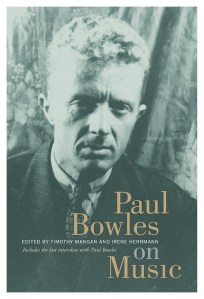 (Part 3 of a talk delivered at the Paul Bowles Centennial Festival at University of California, Santa Cruz, February 2011.)
Or this:
February 25, 1944, New York Herald Tribune
While Strauss’s glorification of the Uebermensch was in the act of being played last night, one found oneself wondering why, unless he wished to make as obvious a contrast between the sublime and the ridiculous in music, Dr. Rodzinski had chosen to expose the ugly form and character of Also Sprach Zarathustra to the Carnegie Hall public directly after the miraculous G Minor Symphony of Mozart. Throughout the course of its convulsions, one thinks of the behavior of some venomous insect or reptile which refuses to stop moving even after it has been hacked to pieces. When the last harmonica-like chord had been uttered and the piece had come to its end, one understood why the time necessary to a sonorously integrated performance such as last night’s had been spent on the work — the public likes this kind of music!
Thus there is no more to say on the subject, save to express one’s ingenuous wonder that this same public should not demand, in a work where the composer screams “wolf!” so very many times, that he should produce such an animal somewhere between the beginning and the end of the piece.
Bad music had social consequences for Bowles. His criticism traveled between two poles, from the reportorial on one end, to the adversarial on the other, as the case, in his mind, warranted. Sometimes he managed to mix the voices, as in his unusually astute reviews of new music to which he was sympathetic. On the other hand, the Mahler and the Strauss reviews quoted, whether one agrees with them or not, are worthy of inclusion in Slonimsky’s famous “Lexicon of Musical Invective.”
He seems to have loathed Rachmaninoff above all practitioners of his art, at least in print. (Out of a sense of self-preservation, perhaps, he never committed his distaste for Beethoven to writing.)
“The piece itself,” he wrote of Rachmaninoff’s Second Piano Concerto, “is couched in an unamusing, degenerate style whose sole point seems to be that of keeping the textures every moment at the highest possible degree of richness. Unfortunately that richness palls almost immediately, as greasiness does in cooking.”
Carlos Kleiber documentary
Here’s the first of a five-part documentary on the conductor Carlos Kleiber. I haven’t yet watched the whole thing, but this first installment, about 15 minutes long, is fascinating. (I’ll post the other four parts here if interest warrants. Otherwise, you can catch the others on YouTube.)
Brooklyn Rider goes global in Laguna

Review: The members of the Brooklyn Rider quartet are joined by Kayhan Kalhor, master of the Persian kamancheh. The Orange County Register, February 14, 2011. Click here to read my review
photo: courtesy of laguna beach music festival
The music criticism of Paul Bowles (part 2)
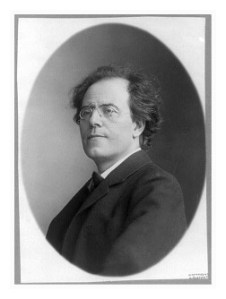 (Part 2 of a talk delivered at the Paul Bowles Centennial Festival at University of California, Santa Cruz, February 2011.)
But Bowles also belonged to the distinguished line of composer/critics which included, among many others, Berlioz, Schumann, Debussy, Copland and Thomson himself. The composer/critic is a special kind of critic, one who looks at and assesses his art form from the inside, as a practitioner and a mechanic. As such, he is often interested in the music itself more than the performance or performer; and he probably has some strong personal feelings, as Bowles did, about what a proper piece of music should sound like.
Bowles’s criticism covers a wide range of musical subjects, from jazz and pop to film and folk music, from traditional classical music to avant-garde. At the Herald Tribune — where Thomson attempted to broaden the range of music criticism and critics often took an anthropological interest in nonclassical music — Bowles fit right in, reviewing Frank Sinatra, the Trapp Family Singers, a child accordionist, a thereminist. He heard Stravinsky conduct his own works, Villa-Lobos, too, and first performances of Shostakovich, Prokofiev, Vaughan Williams, Thomson, Bernstein, Cage, Milhaud, and many others.
He approached his assignments donning different hats — as ethnomusicologist, as anthropologist, as objective reporter and as transparently biased composer.
Support Classical Life

Classical Life

 Classical Life