
In today’s Opera News online, I review the West Coast premiere of Philip Glass’ “Akhnaten” at Long Beach Opera. Click here to read my review.
photo: keith ian polakoff
In today’s Opera News online, I review the West Coast premiere of Philip Glass’ “Akhnaten” at Long Beach Opera. Click here to read my review.
photo: keith ian polakoff

In today’s Orange County Register online, I take a break from classical music and celebrities to write about drink. Here’s an excerpt.
***
Imagine my consternation the other day, when, after a hard day’s work and a night in Mission Viejo facing me, I discovered that, though I had almost a full bottle of gin in the pantry, there was not a drop of vermouth in the house.
We Mangans are a proud race, however. When things look their bleakest is when we spring into action. A brilliant idea crossed my mind. It ran something like this: There must be other drinks you can make with gin besides martinis. (Or gin and tonics – because, sadly, we had no tonic water either.)
Maybe I could make one.


Photos by Keith Ian Polakoff, courtesy of Long Beach Opera. Click on thumbnails for larger views. I hope to have a review in the near future.

Click here to read details of these upcoming concerts in Orange County and slightly beyond.
People always say that the musicians of the Vienna Philharmonic can play Johann Strauss in their sleep. Well, they can’t play it this way, not without our favorite conductor urging them on.
Strange to say, I’ve never heard this overture performed live by any orchestra. Not that I recall, at least. Sometimes, orchestral programming is so lame.
Also, strange (or something)… fewer than 18,000 people have watched this video on YouTube.
More than 10 million have watched this one. (I learned about this video in my other job as a celebrity journalist. The girl who made it is 13, lives in Orange County, and has suddenly become the butt of jokes the world over. Her Opus 1 has already spawned several parodies on YouTube, including one performed as if by Bob Dylan.)
Update: Due to some technical issues, I’ve switched the video above so that you can watch it on site. This is Kleiber conducting the Bavarian State Orchestra.
 Martha Argerich, as they say, is available for a limited number of cancellations.
The Los Angeles Philharmonic has sent word that she’s canceling her appearances with the orchestra next week. Again. She was to perform Beethoven’s Piano Concerto No. 1 with Dudamel and company. No reason was given for her withdrawal, and we hope she’s OK, of course.
Jeremy Denk will replace her (no complaints) and will perform the same concerto.
 In today’s Orange County Register, I review the Pacific Symphony’s performance of “The Passion of Ramakrishna” by Philip Glass. Here’s an excerpt.
***
The prolific and celebrated American composer Philip Glass, 74, is in town this month, talking, performing and listening in a pair of festivals devoted to his music. Along with several others, two of his major works will be performed, “Akhnaten” by Long Beach Opera and “The Passion of Ramakrishna” by the Pacific Symphony.
“Ramakrishna,” you may remember, was commissioned by the Pacific Symphony and first performed (once) during the opening weekend of the Renée and Henry Segerstrom Concert Hall in 2006. This week’s four performances of the work are part of the orchestra’s annual American Composers Festival. Glass himself is in attendance, speaking at pre-concert talks, chatting with conductor Carl St.Clair on stage during the concerts and soaking up the applause at the end. He’ll take to the keyboard Monday night in Samueli Theater and give a recital of his own solo piano music.

It’s always nice when superstar musicians take up the cause of contemporary music. They give it a chance that it wouldn’t otherwise have to reach a wider public and new ears. What’s more, said public, theoretically at least, will approach the music more sympathetically, the logic being that if said superstar is playing it, the music couldn’t be all that bad. A win-win situation.
On the first leg of a mini recital tour dedicated to thorny things and winding up at Carnegie’s Zankel Hall later this month, the violinist Midori stopped by Samueli Theater in Costa Mesa Wednesday night. She lives just up the road in Los Angeles, of course, and teaches at USC. A sizable, but not sold-out audience showed up to hear her. The Philharmonic Society of Orange County presented the event as part of its season-long Japan/OC festival (in collaboration with Carnegie).
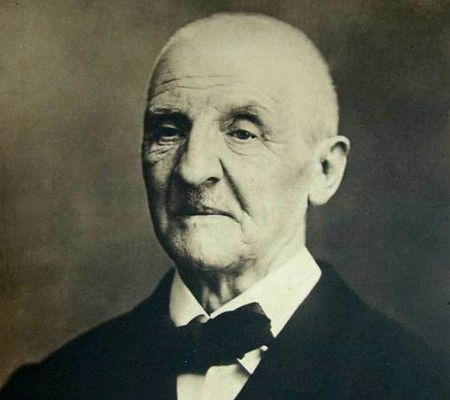
In today’s Orange County Register online, I review Gustavo Dudamel and the Los Angeles Philharmonic in their performance of Bruckner’s Symphony No. 7, Saturday at Segerstrom Concert Hall. Here’s an excerpt:
***
It took a while, but it finally happened. Gustavo Dudamel and the Los Angeles Philharmonic made their way to Orange County together for the first time Saturday afternoon. A sold-out crowd greeted them at Segerstrom Concert Hall, despite the summer weather and the sophisticated, even challenging program.
The main order of business was Anton Bruckner’s gargantuan and magisterial and perhaps long-winded Symphony No. 7 in E. A pair of miniatures – Anton Webern’s Five Pieces for Orchestra, Op. 10, and Toru Takemitsu’s Requiem for Strings – served as preliminary. Not a lot of toes were tapping at this concert.
Click here to read the whole thing
P.S. There’s quite a lot of photos of the concert in the slide show when you follow the link.
In today’s Orange County Register online, I review the Vienna Philharmonic conducted by Semyon Bychkov, who performed Mahler’s cheerful Sixth Symphony in town last night. Here’s an excerpt:
***
Members of the Vienna State Opera Orchestra were in two places, continents apart, Thursday. One contingent was in Vienna, performing waltzes for the annual Opera Ball, a high society event that made news this year with the attendance, by invitation from a quirky millionaire, of Ruby, an 18-year-old Moroccan girl at the center of a sex scandal surrounding Italian Prime Minister Silvio Berlusconi.
The other contingent, constituted as the Vienna Philharmonic, performed in Orange County for the first time in nine years. Under the direction of the Russian-American conductor Semyon Bychkov, the Philharmonikers had no time for nonsense, glitzy, scandalous or otherwise. A single piece rested on their music stands – Gustav Mahler’s Symphony No. 6 in A minor, nicknamed the “Tragic.” There would be no intermission, no encore, and certainly no dancing.


 Classical Life