A year and a half after abdicating his throne, Esa-Pekka Salonen returned this weekend to the Los Angeles Philharmonic with the title of conductor laureate, the orchestra’s first.
He was greeted warmly by the large but less than capacity audience Saturday night in Disney Hall and immediately displayed his wonted charm, taking microphone in hand and providing cogent and droll opening remarks. It was good to have him back.
The magic pretty much stopped there. Blame the program. In hindsight, it seemed a miscalculation by a conductor (justly) celebrated for his programming. It happens.
On one level, the program was too modest. Salonen began with the U.S. premiere of his pal Magnus Lindberg’s “Graffiti,” a formidable chunk of busy blather that necessarily focused a listener’s attention on the music itself rather than the man conducting it. The second half featured a concert performance of Bartók’s only opera, “Bluebeard’s Castle,” which again, though supplying the maestro with some moments in the limelight, left him a secondary character in the proceedings for much of the time.
What’s more, to these ears at least, the Lindberg was a mess (more anon) and the Bartók, though a bona fide masterpiece, does not a concert opera make (also more anon).
Still, none of this would have mattered, perhaps, had the performances compelled. They did not compel.
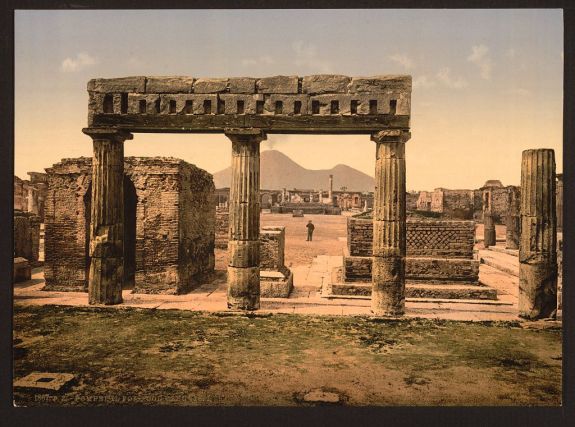
We have to take it on faith that the musicians did what they could with the Lindberg. In “Graffiti,” the Finnish composer, three days Salonen’s senior and currently composer-in-residence at the New York Philharmonic, had the bright idea of setting ancient Roman graffiti texts, found on the walls of Pompeii, to music, using chorus (the Los Angeles Master Chorale) and orchestra.
It’s certainly good material, boastful, bawdy (the f bomb is dropped), funny and touching, though lacking in plot. All of it might have been written yesterday (though not in Latin, of course).
Salonen introduced the piece by saying “it’s like ‘Carmina Burana’ without the embarrassment.” Funny line, but in the event, we would have welcomed the embarrassment. Lindberg doesn’t seem to engage his material head-on, but, rather, decoratively, with modal and neo-tonal harmonies, skittering textures and potent explosions that have little or nothing to do with the meaning of the bon mot at hand.
A magistrate brags of his accomplishments, but the music is neither boastful nor pompous. A sexual exploit is recounted pithily but the music evokes no pith or humor. The blunt graffito “I’m really snotty” incurs no such response from the composer. (Is there such a thing as snotty music? We submit for your consideration “Till Eulenspiegel.”) In fact, many of the graffiti return at various times set to completely different music.
And though the composer says he grouped the texts based on subject matter, the end result is random quotation. Given this expressive disconnect between music and text, “Graffiti” became a tiresome 35 minutes.
What kind of opera makes good concert music? I don’t think that question has been conclusively answered. “Bluebeard” would seem, at first, to be a good candidate. It’s tautly structured in a single act and the orchestral part is spectacular and atmospheric, a tone poem following the “Let’s Make a Deal” storyline of the bride Judith opening the seven sinister doors in Bluebeard’s castle in succession.
But Judith and Bluebeard sing no arias. They engage in a running dialogue. With Anne Sofie von Otter and Willard White standing in front of music stands on each side of the podium there was little interaction. Von Otter proved less than perfect casting, her slender mezzo disappearing in the lower reaches of the part and somewhat less-than-blooming in the arching climaxes. White managed a gruff nobility as Bluebeard, stone-faced, but was also occasionally overwhelmed by the orchestra.
There were spectacular moments in Salonen and the orchestra’s accompaniment, reminders of the smooth power and incisive precision of yore. Yet a lot of it sounded only partially digested, lacking in forward momentum, sculpted phrasing and anxious undertow.
So it went. We still say it was good to have Salonen back. Maybe next time.


 Classical Life
Brilliant review.
The conductor’s choice of the program “focused a listener’s attention on the music itself rather than the man conducting it” and then “again, though supplying the maestro with some moments in the limelight, left him a secondary character in the proceedings for much of the time”. Since when is that a bad thing? To me, that kind of programming would seem to be absolutely the best thing a conductor can do. Focusing audience’s attention on the maestro at the expense of the music would be better? Really?? Honestly, Tim, i can’t believe you wrote that. Isn’t conductor supposed to serve the music? According to Carlo Maria Giulini, he is; i think that is the correct attitude and i always thought that you believed it too.
As for the Lindberg’s piece, it is true that the music does not in any way describe the text. But who says that it should? Wasn’t it obvious to you that in this case the composer was clearly NOT trying to describe the text in the music? Did you ask yourself why not and what was he doing then? Well, i didn’t have a chance to speak with Magnus about this, but here is the way i see it.
Graffiti do not exist in a vacuum – they are scribbled on walls. The walls in Pompeii were of all kinds: gorgeously painted in rich people’s houses and plainly functional elsewhere, well built and cheaply put together, well preserved even after the eruption and nearly destroyed by it – and of course everything in between. Music in this piece is the wall. You might see the most profane statements on most beautiful and colorful walls and then you might see the most poetic statements on ugly or dilapidated walls. In a way then, walls and graffiti are thus independent of each other, yet they do mutually influence their appearances and therefore the way we see them. That is what’s happening in this piece – the orchestra provides walls for the chorus to scribble their graffiti on. Of course, this does not mean that the piece is great. All i am saying is that the fact that the music does not correspond to the text does not mean that the piece is bad. On abstractly musical level, i enjoyed most of it. For me, getting to know this piece during last week was a pleasant and rewarding experience.
Thanks, MarK. As I said, I felt the program was too modest. Under the circumstances I wanted and expected Salonen to be front and center. I guess under normal conditions, a conductor taking a back seat to the music isn’t a bad thing, no. But I don’t want that all the time either. Salonen as performer is of interest to me, and to a lot of other people too.
I could not figure out what Lindberg was up to either from listening to the piece, or from his program note (which seemed at odds with what I was hearing). He never said anything about walls, not that I remember. Is the orchestra supposed to be “the walls,” and is that your own interpretation?
Seems to me that Lindberg missed an opportunity with his text. How would the piece be different if he had used modern graffiti, given the music he wrote for it? If the music does not correspond in some way to the text, as a composer how do you defend your choice of text? No, I’m not saying that Lindberg was under any obligation to use his texts in a literal fashion. But I didn’t hear how he illuminated them in any way, literal or otherwise.
How was this program “too modest”? It consisted of a BIG new piece (not a usual ten-minutes-long throat-clearing opener, but an ambitious 35-minutes-long opus) and a 65-minutes-long quasi-opera, relatively rarely performed but beautiful and dramatic. The performers included a LARGE orchestra, a full-sized mixed chorus, two vocal soloists and a narrator – all of them directed and conducted by one man who was not only definitely “front and center” throughout the entire program, shaping it all by his lonely self, but who also made a spoken introduction to the concert by talking to the audience for a few minutes a little bit about his return and mostly about the new piece. What else did you want him to do – juggle batons while standing on his head?
As for the Graffiti by Lindberg, the interpretation i suggested above is entirely my own but so far i haven’t heard any better one. In the interview that is printed in the program instead of the notes, Magnus says that the piece is “about huge contrasts, with clashes of mood and expression, and a dynamic dialogue between text and music”. A dialogue! In other words, he does see the text and the music as separate, possibly equal, characters and not as music being subservient to the text. Thus, the purpose of the music here is not necessarily to illuminate the text but rather to interact with it – which i think fits quite nicely with my “words on walls” interpretation.
The “how would the piece be different” question is impossible for me to answer because it should be directed to the composer. The same is probably true of the “how do you defend your choice of text” question as well, though i feel that my explanation is one possible answer to it. All i can say about it is this: If the composer was inspired by a certain text to write a fine piece of music, then i as a musician am happy and i don’t think that the composer needs to defend anything.
I think it’s clear in what way I found the program too modest. I might be wrong, but I think it’s clear.
I’m glad you came to terms with “Graffiti.” I wanted to like it as well. On first acquaintance, however, it didn’t make much of an impression. And as the saying goes, you only get one chance to make a first impression. I’m more than willing to hear it again, though.
It seemed clear to me too: you felt that the program did not feature the conductor prominently enough. And i feel that, first, making a program in such a way as to showcase the guy on the podium is not a particularly lofty idea to begin with, and that, second, this program did in fact give the opportunity for the conductor to shine virtually as much as any other program possibly can.
As for Graffiti, i have absolutely no issue with you not liking it. My disagreement was with the main reason you gave for your dislike. That’s all.
As always, I enjoyed reading your review Tim. I would think that EPS wouldn’t care if he were in the limelight at all, he just wanted to program pieces that meant a lot to him. I think the ultimate example of this was his programming of the sublime Symphony of Psalms as his final work as music director.
Mind you, of all operas that might be best suited to the concert-hal, surely ‘Bluebeard’ is the best: the orchestral accompaniment is so rich in implied imagery, any staging is almost surplus to reqyurements! I have a couple of recordings that I infinitely prefer to having seen it live – even though the live performance also included the great Willard White…
Bartok’s music takes Debussy’s ‘Pelleas’ to the greatest extreme: everything visual is rendered in the music, leaving a staged production almost unnecessary. (*blue touch-paper lit: stands well back…).
That’s exactly what I thought too, Dan, before I saw this concert version.
But i still think that Dan_D is right about it and that Tim was right before last week too.
The fact that this particular performance did not fare perfectly well (and i agree with Tim that it didn’t) does not mean that the piece can’t work brilliantly in other circumstances.
It might and it might not, MarK. My feelings about “Bluebeard” as concert opera were based on factors other than the quality of the performance. I think it’s a great opera, so that’s not it. But the vocal parts are basically sung dialogue, at least a good deal of the time, and not completely satisfying as mere music. It works fine when it’s staged, because the singers are acting and playing out the drama. Here, it was more like actors reading through a play (admittedly with some pretty good music behind them).
Also, I think the orchestral music is less effective without the staging. So much of it is tied to the visual aspect of the drama (the 7 doors), and it’s much more impressive when there actually are doors opening up and light bursting out in tandem with the musical pictures. There’s a cinematic aspect to Bartok’s music in this piece.
Of course, any opera by definition should benefit from a good staging, but all i am saying is that this one loses less of its appeal when performed in concert than virtually any other one.
Actually, I think operas laden with arias, such as “The Marriage of Figaro” or “Il Trovatore,” might actually work better in concert. I saw a concert version of “Porgy and Bess” once, and that was grand.
Better than what?
Better than the Bluebeard could be in a truly outstanding concert performance?
Or better than the same operas can be in truly outstanding staged performances?
In either case, my answer would be – not likely. Opera is a theatrical genre. And there are fewer theatrical elements in the Bluebeard than in virtually any other opera. Maybe La voix humaine by Poulenc can be a possible exception.
Better than “Bluebeard” in concert. I’m am not talking about the intrinsic worth of any opera. I’m just talking about what may or may not work best in concert format.
It’s a nice theory you have that operas with fewer theatrical elements will work better in concert than operas with a lot of theatrical elements, but I don’t know that that’s necessarily true. Since, in concert, the theatrical element is unseen, the music becomes the lone focus of the event. So, the nature of the music becomes the decisive factor in concert performance.
“Figaro” and “Trovatore” have lots of entertaining music in them, music that entertains regardless of theatrical context. (Thus, arias from them are featured on recorded compilations and sung separately in concert all the time.) “Bluebeard” is more essentially theatrical — everything serves the drama, none of the music is there simply to entertain. And, therefore, it suffers even more than the other operas I’ve mentioned when performed in concert.
That’s exactly right: in concert “the music becomes the lone focus of the event” and “the nature of the music becomes the decisive factor”. And so, since music in Bluebeard is “more essentially theatrical” containing nothing but drama – and practically all of it – visual elements that are needed to project the dramatic content to the audience are therefore minimized and are much less crucial than in those operas where music merely entertains “regardless”.
Not necessarily. Because in concert, the music, not the drama, becomes the focus for most listeners. “Bluebeard” loses more of its essential qualities in concert.
Anyway, I guess we’re not going to agree. No biggie. It’s been a delight to discuss our theories.
It’s funny – we agree and disagree at the same time. For example, i agree completely that “in concert, the music becomes the focus for most listeners” and that in the Bluebeard “everything serves the drama, none of the music is there simply to entertain”. For me it means that therefore in concert Bartok’s music gives most of the necessary dramatic information without theatrical enhancement, while you are somehow coming to the opposite conclusion.
Well, anyway, it’s been great to discuss all that here and i thank you, as always, for giving me and others this opportunity. For now, all i want is to wish you, Tim, your family, and everyone who reads this, the most wonderful, healthy, peaceful and joyous Thanksgiving holiday!
Thanks, MarK. Ditto to you and yours.
Oh, well. I hope he has better luck next time.
As for his aural perceptions of his former home, I have to agree with him (around 1:00 on this video):
http://www.youtube.com/user/LAPhilVideos#p/a/u/2/F92lmTegg34