
Concert review: Gustavo Dudamel and the Los Angeles Philharmonic perform a memorable night of light classics at the Hollywood Bowl. The Orange County Register, August 6, 2010.
photo: mathew imaging
Concert review: Gustavo Dudamel and the Los Angeles Philharmonic perform a memorable night of light classics at the Hollywood Bowl. The Orange County Register, August 6, 2010.
photo: mathew imaging
Ravel claimed that he had influenced him more than any other composer. Poulenc wrote a biography of him. Grove’s Dictionary calls him “one of the most inventive composers of the 19th century.”
And yet the only music that you’ve likely heard composed by Emmanuel Chabrier (1841-1894) is “España.” A shame. Not that it isn’t a wonderful piece. It’s one of my favorites, in fact.
The reason for Chabrier’s neglect is the subject of a recent column in the Wall Street Journal by Terry Teachout. Teachout’s premise is that Chabrier is essentially a witty and comic composer and we do not regard such cheerfulness as “serious.”
True enough. But Chabrier is also one of any number of late 19th century French composers relegated to the fringes of the repertoire, along with composers such as Chausson, Franck, Lalo, Fauré and D’Indy, among others. Contemporary programmers (I won’t say “audiences,” because they haven’t heard the music) seem to have a decided preference for the German and Russian composers of the period.
Chabrier’s music is characterized by rhythmic vitality and a pungent harmonic language that was a forerunner of Impressionism. His music also makes you feel good.
Other works by Chabrier worth checking out include his piano masterwork “Pieces pittoresques” (recorded by Alain Planes), his orchestral music including the “Joyeuse marche” (recorded by Ernest Ansermet) and his comic opera “Le roi malgre roi” (recorded by Charles Dutoit and company, and which Ravel supposedly knew from memory).
Chabrier’s “Idyll” from “Pieces pittoresques,” by the way, is simply one of the most beautiful pieces ever written. On YouTube, you can hear Alfred Cortot playing it.
In his researches, Teachout discovered an interesting tidbit too delectable not to share. The popular 50s tune “Hot Diggity (Dog Ziggity Boom)” is based on “España.” I did not know that. Hear for yourself.
Concert review: Gustavo Dudamel conducts Gershwin and Bernstein at the Hollywood Bowl. The Orange County Register, August 4, 2010. Read the whole thing here
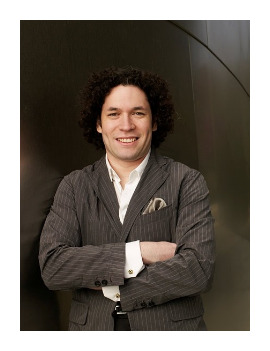 Gustavo Dudamel’s back conducting the Los Angeles Philharmonic this week for the first time since taking the group on a U.S. tour in the spring. The reviews were mixed then and so there is a sense that the young conductor has to prove himself (or has something to prove) all over again. But I don’t look at it that way, and that’s not just because I’ve generally liked what I’ve heard so far.
All three of his concerts this week are at the Hollywood Bowl, that venerable, magical, frustrating outdoor venue where the L.A. Phil spends the summer. Sunday, Dudamel made his U.S. operatic debut conducting a concert “Carmen” there. I missed it, but this reviewer thought it was good enough to predict a future at La Scala for Dudamel. I don’t doubt it.
I’ll be approaching Dudamel’s concerts on Tuesday and Thursday with great anticipation and an open mind. At the same time, I won’t be expecting a lot (or, maybe I should say, “too much.”) Expecting too much at the Bowl is always a mistake. The rehearsal schedule is truncated and the sound system is dubious.

The Association of California Symphony Orchestras offers a monthly summary of orchestra performances in California. We reprint them here for your convenience and amazement. The information listed below represents concerts presented by current member organizations and is subject to change. If you would like your own orchestra’s concerts listed, see the instructions at the end of this entry.
Saturday, August 7, at 8 p.m.
Music Academy of the West
Nicholas McGegan, conductor
Bach: Brandenburg Concerto No. 1 in F Major
Handel: Music for the Royal Fireworks
Beethoven: Symphony No. 8 in F Major
First Presbyterian Church, 21 E. Constance Ave., Santa Barbara
(805) 969-8787
http://www.musicacademy.org
Saturday, August 7, at 7:30 p.m.
Sunday, August 8, at 7:30 p.m.
Southwest Chamber Music
Jeff von der Schmidt, conductor
Debussy: Danse sacree et danse profane; String Quartet
Satie: Le Fils des Etoiles,
Anne Le Baron: Solar Music for Flute & Harp,
Ravel: Introduction & Allegro for Flute, Clarinet, Harp & Strings
Huntington Library, 1151 Oxford Rd., San Marino
(800) 726-7147
http://www.swmusic.org
I’ve been off for a few days, and still am. I would have told you sooner, but I was unexpectedly away from an internet connection.
My agenda has included nothing more serious than hiking in the Eastern Sierras, reading obscure novels by William Dean Howells, eating well and listening (ironically) to Herb Alpert and the Tijuana Brass.
I’ll be back soon.
The third movement of the Piano Concerto No. 1, with Arturo Benedetti Michelangeli (piano), Carlo Maria Giulini (conductor) and the Vienna Symphony. 1979.
The source is a video tape, so the sound and picture aren’t perfect, but the performance is worth sharing.
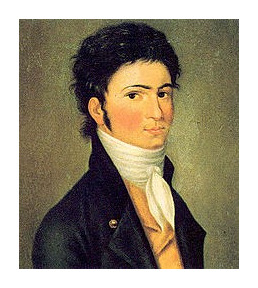 Here’s the second of my series of nine essays on the Beethoven symphonies first published in 1999.
Beethoven’s Second: A master’s neglected gem.
I’ll dig up the others out of the archives and publish them in the weeks ahead.
My essay on Beethoven’s First is here.
Arturo Benedetti Michelangeli (1920-1995) plays Sonata in C by Domenico Scarlatti
 Making sense of modern (classical) music. The Orange County Register, July 23, 2010.
This is another list of 10 recordings. The challenge here was to pick 10 recordings of modern and contemporary music that would help guide the novice, but curious, listener. Some of the usual suspects are included, but I picked a few surprises too, I think.
I have found a lot of resistance to modern classical music in O.C. But I have also encountered many listeners who, while they don’t understand it, want to.


 Classical Life