Honest, dissenting ears

Should a music critic be honest about his or her failings and blind spots, or should he attempt to teach his audience to have the “correct” view, pretending to hold a truth that he himself does not feel?

“The Knight of the Rose,” or The Rose Cavalier, as the Metropolitan Opera program so drolly translates it, was the operatic fare of the last evening. The audience adored it and the singers seemed to be having a good time. The performance all through was remarkably even and smooth. I am sure it is a personal shortcoming that I did not find myself taking much interest in the affair.

If I may be permitted the confession, I have never been able to keep my mind on Der Rosenkavalier. I can take a cat nap here and there without seeming to miss anything, because when I wake up the music is always doing exactly what it was when I dropped off.  It is full of waltzes that all sound alike and that have nothing to do with the play, which is about mid-eighteenth-century Vienna. It is full of broken-up vocal lines that have no musical necessity, because the orchestra always has the tune anyway, and that always have to be sung loud because the orchestration is thick and pushing, owing to Strauss’s constant overwriting for the horns. I think it is really an acting opera, because the vocal line is not very interesting and the orchestral writing, though elaborate, is to my ear wholly inconsequential. I make exception vocally for the final trio, which is as pretty as can be, and instrumentally for the well-known passage where the celesta comments in another key.

— Virgil Thomson, The New York Herald Tribune, March 14, 1942

Miscellany

In the New York Times, Alex Ross defends opera, including expensive “Ring” cycles, against charges of elitism. … In the Financial Times, Martin Bernheimer is less than impressed with the opening installment of said “Ring” at the Met. … President Obama digs classical music (first item). … Gustavo Dudamel and the Vienna Philharmonic spend a day in bluegrass country. … Founding conductor of the California Symphony fired by the board, but the plot thickens. …

Above, the Annoying Orange has at Lady Gaga (i.e. Lady Pasta). Note the expression on his face when he appears in the diva’s video within the video. More than 8 million people have seen this on YouTube.

‘Il Postino’ becomes an opera

Review: Placido Domingo plays Pablo Neruda in the world premiere production of Daniel Catan’s ‘Il Postino’ at Los Angeles Opera. The Orange County Register, September 30, 2010. Click here to read my review.

photo: robert millard

Quote of the day

The characteristic of the hour is that the commonplace mind, knowing itself to be commonplace, has the assurance to proclaim the rights of the commonplace and impose them wherever it will. As they say in the United States: “to be different is to be indecent.” The mass crushes beneath it everything that is different, everything that is excellent, individual, qualified and select. Anybody who is not like everybody, who does not think like everybody, runs the risk of being eliminated. And it is clear, of course, that this “everybody” is not “everybody.” “Everybody” was normally the complex unity of the mass and the divergent, specialized minorities. Nowadays, “everybody” is the mass alone. Here we have the formidable fact of our times, described without any concealment of the brutality of its features.

–from “The Revolt of the Masses” by Jose Ortega y Gasset

Great moments in film music: ‘The Sting’

It’s the night before the big sting. You don’t really need to know anything else, and it’s complicated anyway. Scott Joplin’s “Solace” is introduced on the soundtrack, lending the perfectly wistful mood. It carries the scene from 26 seconds into this clip until 4 minutes and 18 seconds. Notice how little dialogue there is.

The rest of the clip is good too, but there’s no music.

Jon Kimura Parker played this piece the other night as an encore to Tchaikovsky’s Piano Concerto No. 1.

Pacific Symphony opens 32nd season

Review: Carl St.Clair conducts the orchestra in works by Weber and Brahms. They are joined by Jon Kimura Parker for Tchaikovsky’s Piano Concerto No. 1. The Orange County Register, September 24, 2010. Click here to read my review.

Top concert picks: New season finally here

The classical music season in Southern California officially opens tonight and it will be a relief to be indoors. It felt like the summer would never end.

Here are my  top concert and opera picks for the week ahead.

‘Il Postino’ becomes an opera

I chat with tenor Charles Castronovo, a Cal State Fullerton alum, and composer Daniel Catán about the new opera “Il Postino,” premiering at Los Angeles Opera this week. Click here to read interview. The Orange County Register, September 21, 2010.

Fall arts preview, classical music division top ten

Here’s what you’ve all been waiting for: my fall arts preview, classical music division. The link will send you to a short article (a “topper” in journalese) with a slide show. Click through the slide show, and read the captions for information on my picks. Every slide you view and read is a “hit” for Tim Mangan and the cause of classical music. Go ahead, watch the slide show twice, and send the link to your friends, neighbors, enemies and congressmen. Click here, or above.

10 Giulini recordings

Here’s a list of ten recommended Giulini recordings that some of you asked for. In no particular order. All are available on Amazon.com. Click on the thumbnails for larger views of the covers. Giulini lovers: Please weigh in with some of your own suggestions in the comments section.

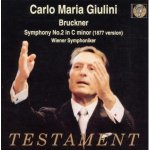
1. Bruckner: Symphony No. 2. Makes a (deservedly?) neglected work sound like a masterpiece. Vienna Symphony. Testament.

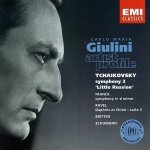
2. Carlo Maria Giulini: Artist Profile. Includes sizzling accounts of Tchaikovsky’s Symphony No. 2 and Britten’s “Young Person’s Guide to the Orchestra” with the Philharmonia Orchestra. EMI Classics.

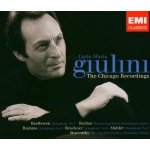
3. Carlo Maria Giulini: The Chicago Recordings. Includes roof-raising accounts of Bruckner’s Symphony No. 9 and the orchestral music to Berlioz’s “Romeo and Juliet” with the Chicago Symphony.  EMI Classics.

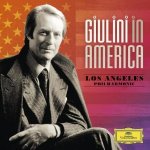
4. Giulini in America. All of his purely symphonic recordings with the Los Angeles Philharmonic, including Beethoven’s Symphonies 3, 5 and 6 (the “Eroica” is among the best ever recorded), a stellar Schumann Third and Ravel’s “Mother Goose,” a specialty. Deutsche Grammophon.

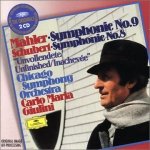
5. Mahler: Symphony No. 9. Intense. Chicago Symphony. Deutsche Grammophon.

Read more…