Scientific American comes out for music education

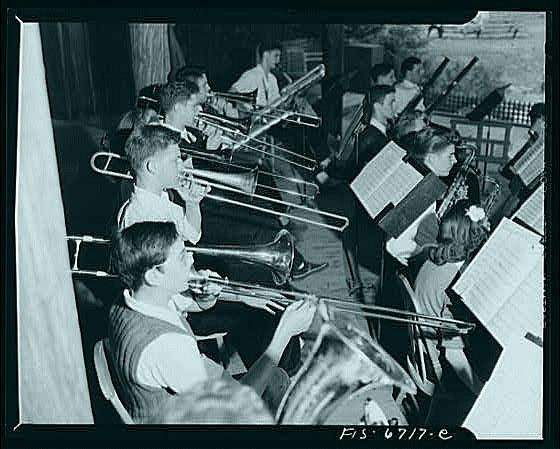
The editors of Scientific American have taken a brave stance on the teaching of music in our schools. They’re for it.

That’s all well and good, of course. We’re all for music education in schools, as well as pets for the elderly, walks on the beach and a cure for cancer. I know that’s controversial, but that’s just the kind of person I am. Always looking for a fight.

I suppose that it bolsters the argument in some people’s minds that a scientific publication comes out in support of — gasp — music! But I ‘m struck once again, as always in such cases, by the nature of the argument. The premise is that music is good for your child because a) it bolsters his math scores or b) it helps her with spatial skills or c) it aids his focus and concentration. Etc. Scientific studies prove it.

Call it the utilitarian view: Music is good for kids because it helps them in the things that really matter.

No one would ever think of defending the study of algebra or chemistry or Shakespeare from such premises, even though most of us probably have little practical use for any of them the rest of our lives. No one defends sports in schools in such a way. All of these things are thought of as intrinsic goods, and beyond the pale of debate. Not that we disagree. Kids have to exercise their minds and bodies.

But put an instrument in some child’s eager hands and you have to come up with all sorts of non-musical reasons why you should do so.

That music is a good and necessary thing in itself is apparently beyond the comprehension of most people.
Click here the read the article in Scientific American.

Salonen, Boulez, L.A. Phil to offer tribute to Ernest Fleischmann

The Los Angeles Philharmonic announced today that it would offer a concert, free to subscribers, in tribute to its late executive vice president and managing director, Ernest Fleischmann. Conductor Laureate Esa-Pekka Salonen, Pierre Boulez and associate conductor Lionel Bringuier are set to conduct the Los Angeles Philharmonic New Music Group for the event, at 8 p.m. March 29 in Walt Disney Concert Hall.

The program will be announced at a later date. Free tickets will be made available to subscribers beginning February 22.

Great moments in commercial music: Jameson’s whiskey

Music by Mozart (slow movement of the Third Violin concerto), whiskey by Jameson — good music, good drink, clever commercial.

Incidentally, the concerto was written in 1775; the storm in the commercial takes place in 1781.

Related post:

St. Patrick’s Day Irish whiskey taste test

Esa-Pekka Salonen’s favourite drink

What you want for Christmas (II)

Unlike our last entry in this sweepstakes, this one has been around for a couple of years now, but it’s worth reviving in this case. “Works of Igor Stravinsky” includes virtually everything that the chameleon composer wrote, from the Symphony in E-flat to the Requiem canticles, all conducted by the composer (a few pieces by Craft), on 22 CDs.

Too dear, you say? Au contraire. Amazon.com has the box set on sale for $28 and change (click here).

Related posts:

What you want for Christmas

Ebony Concerto: Stravinsky and the Woody Herman Orchestra

Ebony Concerto: Stravinsky and the Woody Herman Orchestra

Recorded in 1946, Igor Stravinsky conducts the Woody Herman Orchestra in the Ebony Concerto. It doesn’t get much cooler than this.

I. Moderato
II. Andante
III. Moderato

Stravinsky’s Tango

Performed by Michel Béroff, with score.

What you want for Christmas

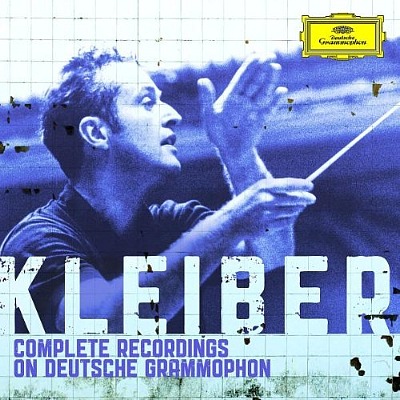
Of course, if you’re reading this blog, you probably already have most of this. If not, now’s the time to jump. The set includes Kleiber’s recordings of Beethoven’s Symphonies Nos. 5 and 7, Brahms’ Symphony No. 4, Schubert’s Symphonies Nos. 3 and 8, as well as complete traversals of La Traviata, Der Freischutz, Tristan and Isolde and Die Fledermaus, all top drawer. The 12-CD set is budget priced. Here’s the link to the Amazon page.

The 50s, in verse, or: How I learned to stop worrying and love the modern music

Originally penned in 2007, inspired by Alex Ross’ ‘The Rest is Noise’, a rhyming account of classical music history in the 1950s:

Boulez once said
That Schoenberg was dead,
And totaled his serial-ism.

Cage took to chance,
His music to enhance,
And thereby caused the schism.

Xenakis then found,
A brand new ground –
Buildings by atonal means.

Shostakovich, meanwhiles,
Put music in piles,
And filed away all his dreams.

Copland spoke to
The McCarthy zoo,
And never quite came back.

Stravinsky withstood
As well as he could,
By dint of 12-tonal tack.

Ligeti split
His music a bit,
Micro-polyphonic in style.

Stockhausen unwound
An interplanet’ry sound,
His hand on electronic dial.

The listener said wha?
The listener said huh?
I think that there’s something I’m missin’.

Babbitt said no,
It’s all in the row,
And who gives a crap if you listen?

Finnish music critic wins country’s top non-fiction prize

A music critic for the Helsingin Sanomat newspaper has won the 2010 Tieto-Finlandia award, Finland’s top non-fiction prize, and EUR 30,000 to boot.

Vesa Sirén is his name and his book is called “Suomalaiset kapellimestarit, Sibeliuksesta Saloseen, Kajanuksesta Franckiin” (or, “Finnish Conductors: from Sibelius to Salonen, from Kajanus to Franck”).

As far as I can tell, there is no English-language edition yet available, though I’m sure it would be a bestseller in the U.S.

Sirén told his newspaper that he wrote the work “in the wee small hours of the night. As a rule, for two or three hours from the moment when I managed to get my child off to bed.” He also took a five month leave of absence, funded by the Finnish Cultural Foundation.

Among the tidbits in this 1,000 page tome: Sibelius had a good conducting technique “unless he was drunk.”

Click here to read an interview with Sirén.

Great moments in film music: ‘The Hudsucker Proxy’

The “Hula Hoop Sequence” from “The Hudsucker Proxy,” music by Aram Khachaturian.