Pacific Symphony plays spacey Strausses

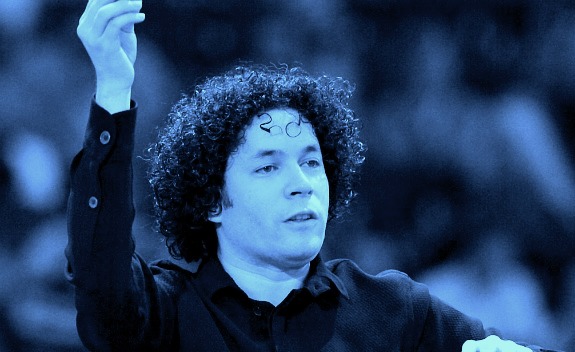
In today’s Orange County Register online, I review last night’s outer space-themed concert performed by conductor Giancarlo Guerrero and the Pacific Symphony. Jeremy Denk played Mozart.

Click here to read my review, or pick up a copy of tomorrow’s newspaper.

Karl Böhm: Rock star

I wonder if this has ever happened to a classical musician in the United States, at any time. This video is even edited, so the celebration apparently went on even longer. The event captured therein is reportedly Böhm’s last concert in Japan.

I suppose the ovation after Esa-Pekka Salonen’s last concert as music director of the L.A. Philharmonic was similar, though not quite in the same tone.

A young Carlo Maria Giulini conducts Mozart’s ‘Haffner’ Symphony

Carlo Maria Giulini conducts L’Orchestre de Chambre de Hollande in a performance of Mozart’s Symphony No. 35, “Haffner,” on August 27, 1959. I don’t think I’ve seen footage of Giulini this early in his career. He’s 45 here. This video was only recently added to YouTube, and few have watched it. What do you think?

Gergiev, Mariinsky perform Tchaikovsky symphonies in O.C.

In today’s Orange County Register online, I review the Mariinsky Theatre Orchestra and conductor Valery Gergiev performing Tchaikovsky’s Symphonies No. 2 and 5 at Segerstrom Concert Hall on Thursday night.

Click here to read my review, or pick up a copy of tomorrow’s newspaper.

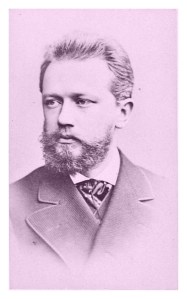
Photo: Tchaikovsky, carte de visite, between 1880-1886. Library of Congress.

Eye on Dudamel

As Gustavo Dudamel and the Los Angeles Philharmonic head to the Bay Area for two performances later this month, San Francisco Classical Voice asked me to take a look at the Dudamel regime so far and what they might expect. Click here to read my article.

Piero Weiss, 1928-2011

Piero Weiss, pianist and musicologist, died Sunday in Baltimore. The New York Times has an obituary here.

I count Weiss as one of the best teachers I ever had.

He began teaching at the Peabody Conservatory of Music in Baltimore in 1985, the same year that I arrived there to study in the music criticism program. We were soon closely intertwined — often, I think, to his consternation. Weiss was a learned man, deeply devoted to music and, as a scholar, committed to getting things exactly right. He had mastered five or six European languages; he had taught himself Ancient Greek late in life. He was also a gifted pianist, but wasn’t playing anymore by the time I met him. He was kind enough to give me some old recordings of himself playing, however, and those recordings were impressive.

I have many memories of him. I learned, among other things, how to write a program note from Weiss. In some fashion, I forget how exactly, I was given the job of writing the program notes for the concerts at the Conservatory, a pretty big job. Weiss was my editor and adviser. I turned in my first set of notes to him, and he flipped out. He called me on the pay phone right outside my dorm room, steaming. “Why, these aren’t even in English!” he growled, and I was crushed. I took them to the English teacher at the school, a young man named Michael Clive, who assured me they weren’t all that bad (he may have been lying), but that Weiss wanted them in, well, something like the King’s English, and he helped me fix them up to Weiss’ satisfaction. (Not sure he’d like that last sentence … it’s a little long.)

Weiss could be stern, but almost everyone liked him. He had an intensity as well as vulnerability that everyone responded to. He was going through a divorce when I got to know him, and it was clear that he was suffering. I helped him move out of his brownstone into an apartment. He was very particular about where we set his desk and typewriter, not just the area, but the exact spot. He was a runner, and rather gaunt, wore wire rims and had a gray beard. He looked the part of the scholar. The students could easily imitate him, because he always closed his eyes when concentrating, and clasped the bridge of his nose with his fingers.

In his wallet, he proudly carried a photograph of himself as a boy, perhaps a teen, standing with Toscanini, who was a family friend. There was also some connection between the Weiss family and James Joyce (Piero was born in Trieste), but more than that I do not know.

Our big project together was my graduate research paper, which was on the early English music historian Charles Burney’s visit to Paris in the 1770s. Weiss guided my research, pointing me in the right direction and encouraging me to explore as far as I could. I would take many of the documents I found to him to translate, and he would do so on the spot, reading from them directly into my tape recorder. I was delighted when he was happy and surprised with some of the things I managed to dig up — a catalog from a music store that Burney had visited, the weather report on a particular day of his trip, the letters of Baron von Grimm describing a concert Burney had been at.

I started to write up my findings, and would bring the pages to him as I finished them. He was initially unhappy with what he read (I was trying way too hard), but gave me a bit of advice that I’ll never forget. It doesn’t seem like much now. But he said, “Just tell me what you’ve found.” Nothing else, no gilding, just the facts, ma’am. He knew I had found plenty, and a straightforward account would be just the thing. He eventually ended up publishing my Burney paper, and that of another student, as the first issue of the Peabody Essays in Music History. He sent them out to university libraries and offered a subscription. I don’t think the publication ever panned out (there was one other volume, I believe), but my essay is still in the UCLA music library and also at Johns Hopkins.

Among his books are Music in the Western World (with Richard Taruskin), Opera: A History in Documents, and Letters of Composers Through Six Centuries.

Guest blog: ‘Quiet Imprint’ by Thang Dao

Guest blogger and dance critic Laura Bleiberg provides the following, Classical Life’s first dance review:

A concert isn’t always just a concert. Sometimes an ulterior motive, below the surface and not publicly discussed, is what drives a performance.

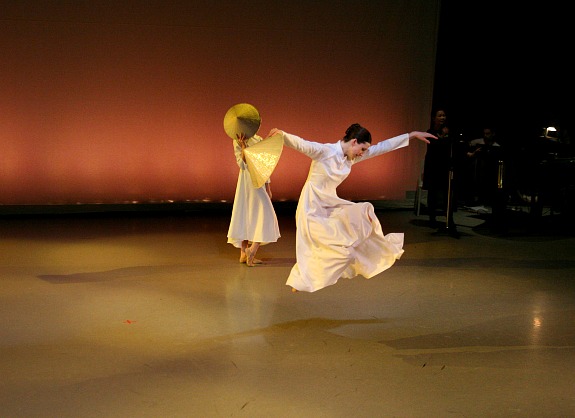
On Sunday (Oct. 9), New York City-based choreographer Thang Dao rented the Rose Center Theater in Westminster – in Little Saigon – to self-present a commissioned piece he made for Ballet Austin II, “Quiet Imprint.” Dao’s motivation was simple. Rather than wait around for the ballet to maybe make it out to Southern California, he decided to bring it here himself. He wanted the large, local Vietnamese community to see “Quiet Imprint,” and to have more experience with contemporary concert dance.

Dao was born in Danang, Vietnam, and raised in Los Angeles. He has had success as a dancer (a former member of the cutting-edge Stephen Petronio Company) and has won awards for his choreography. He directs his own dance company now. In a program note, Dao wrote that “Quiet Imprint” was the result of a personal “journey” to reflect on his culture and heritage, and to reveal the “imprint” that war and dislocation have had on the Vietnamese Diaspora.

Read more…

Dudamel comment

This morning I received a comment on this blog that was filled with venomous vitriol aimed squarely at Gustavo Dudamel and the Los Angeles Philharmonic.

I am always surprised by the Dudamel naysayers or even doubters — have they actually heard the guy conduct, or are they just reacting to the hype? Or to “the politics” they claim to see in his appointment?

Usually, it seems to me, there is something extra-musical about the criticism — especially of the strongly negative variety — of Dudamel.

Ironically (if that’s the word I want), the comment arrived as I was sitting at my laptop writing a preview article for a Bay Area publication on Dudamel and the orchestra’s visit up there later this month, and touching upon this very topic.

As a music critic, you get a fair amount of this stuff sent your way. Perhaps I’m more sensitive about the subject because of it. The general public may not even know it happens. Certainly Esa-Pekka Salonen was never the target of such negativity, even though there were plenty who didn’t take a special liking to him musically.

Of course, the said comment was anonymous, or, I should say, it came from someone who called himself “disgusted.”

Well, Mr. Disgusted, I’m not going to publish your comment, but not because I disagree with it. We refrain from name calling and swearing here at Classical Life, as well as with the broadcasting of unsubstantiated conspiracy theories.

If you’d like to give it another shot once you’ve calmed down, go ahead. But I can’t guarantee anything on my end.

Dudamel, LA Phil presented live in Orange County movie theaters

Gustavo Dudamel and the Los Angeles Philharmonic will perform an all-Mendelssohn program on Sunday that will be broadcast live in local movie theaters. Dutch violinist Janine Jansen (pictured) performs the Violin Concerto.

Click here to read a brief article on the presentation and see a list of O.C. theaters showing it.

Great moments in commercial music: Air France

The music is by Mozart, specifically, it’s the Adagio (or part of it) to his Piano Concerto No. 23 in A, K. 488. The Adagio is the only piece that Mozart ever wrote in the key of F-sharp minor.

See also:

Great moments in commercial music: Japanese cell phone

Great moments in commercial music: Jameson’s whiskey